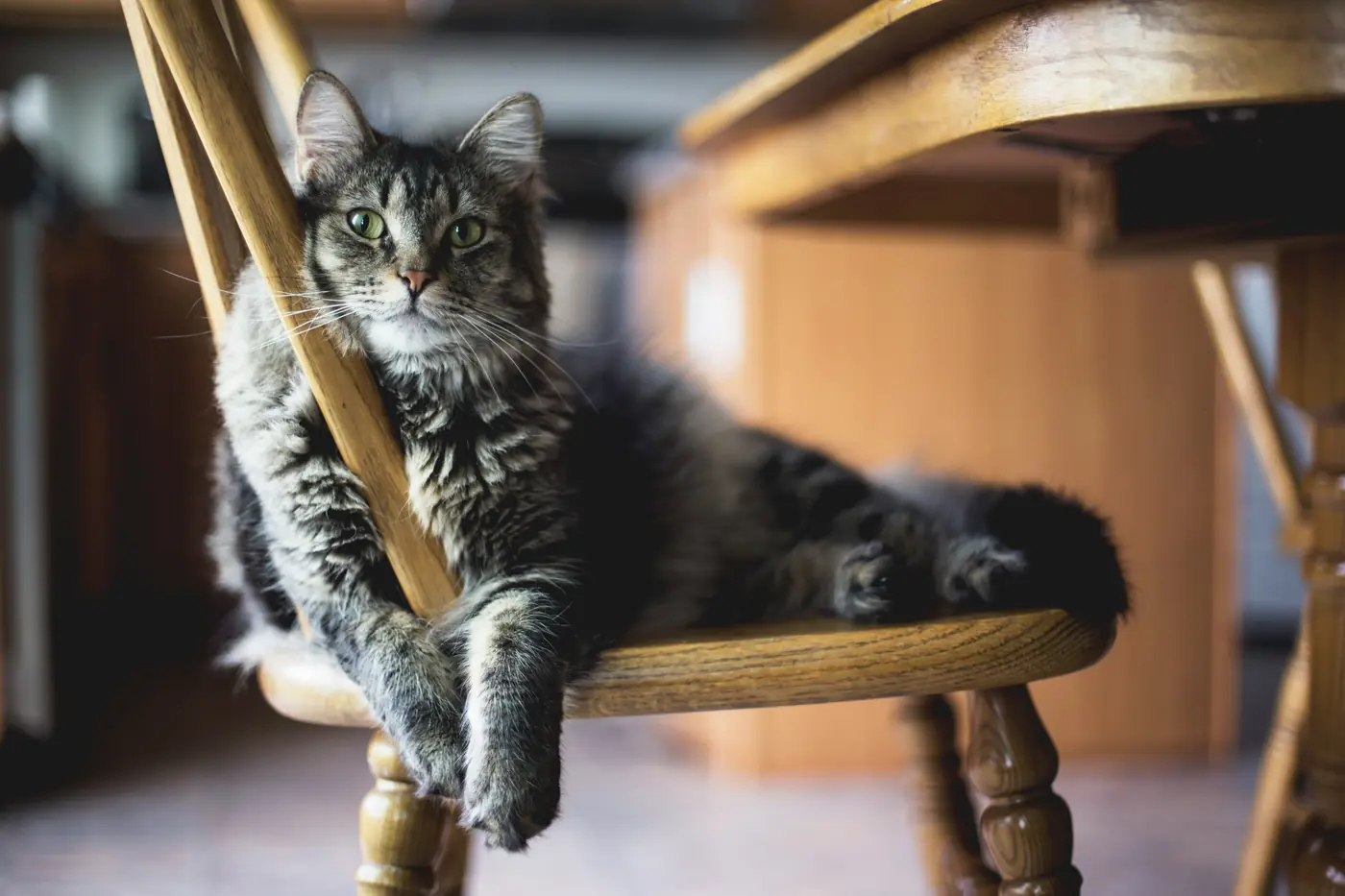
Managing weight loss and sarcopenia in feline CKD
Updated June 2026
For the dedicated caretaker, few things are as distressing as watching a cat with Chronic Kidney Disease (CKD) slowly fade away. You follow the renal diet protocols and administer fluids, yet the spine becomes prominent, the thigh muscles thin, and the weight drops rapidly.
This phenomenon is not merely weight loss; it is a brutal combination of Sarcopenia (age-related muscle loss) and Cachexia (disease-driven muscle wasting). In CKD, the body enters a catabolic state where it consumes its own muscle mass for amino acids because it cannot utilize dietary protein efficiently.
Addressing this requires a massive shift from simple calorie counting to aggressive metabolic intervention. Here is the medical protocol for stabilizing body condition in the wasting CKD patient.
1. Differential diagnosis: Is it just the kidneys?
Before assuming the weight loss is solely due to renal progression, you must definitively rule out the most common comorbidity: Feline Hyperthyroidism.
Hyperthyroidism increases the metabolic rate, putting the cat's body into overdrive. This causes rapid, profound weight loss despite a ravenous appetite. Hyperthyroidism severely increases blood flow to the kidneys, artificially lowering creatinine levels and masking the true severity of the kidney damage. Request a Total T4 and Free T4 panel. Treating the thyroid reveals the true state of the kidneys and stops the hypermetabolic wasting (Peterson, 2012).
2. The protein paradox: Quality vs. restriction
Renal diets are restricted in protein to lower BUN and phosphorus. However, excessive restriction heavily drives negative nitrogen balance.
When a carnivore does not ingest enough essential amino acids, the body activates gluconeogenesis, aggressively breaking down skeletal muscle to liberate amino acids for energy and repair. This is exactly why CKD cats develop the characteristic bony spine.
In IRIS Stages 1 and 2, protein restriction is strictly contraindicated if it leads to muscle loss (Laflamme, 2018). The goal is modified protein intake, feeding highly bioavailable animal protein like egg or chicken producing minimal nitrogenous waste. If your cat is losing muscle on a renal diet, consult your veterinarian about adding a high-quality protein source like egg whites and utilizing a phosphorus binder to mitigate the phosphorus load. This prioritizes muscle maintenance without sacrificing kidney safety.
3. Therapeutic supplementation
Diet alone is frequently insufficient to reverse cachexia. We must actively support the cellular machinery.
AminAvast: Mitochondrial Support
AminAvast is a proprietary blend of amino acids targeting the mitochondria within the kidney cells. The kidneys boast one of the highest metabolic rates in the body; when mitochondria fail, cells die. It contains L-Arginine to maintain renal blood flow and Glycine to protect against ammonia toxicity. Clinical studies suggest this peptide blend stabilizes creatinine while drastically improving coat condition and appetite (Hall et al., 2018).
Amino B-Plex: Systemic Support
While AminAvast targets kidney cells, Amino B-Plex targets systemic consequences. CKD cats urinate excessively, causing a massive washout of water-soluble B-vitamins. Deficiency leads to anorexia and severe anemia. Amino B-Plex provides L-Carnitine, critical for transporting fatty acids into the mitochondria to be burned for energy, making it absolutely essential for maintaining lean muscle mass during catabolism.
Using these two together covers both bases: AminAvast protects renal structure, while Amino B-Plex fuels the metabolic engine to actively prevent wasting.
4. Caloric strategy: Avoiding empty calories
When a cat stops eating, caretakers often reach in panic for high-calorie gels like Nutri-Cal.
The problem is most calorie gels consist of corn syrup, malt syrup, or soybean oil. High-glycemic sugars spike insulin, creating heavy inflammation. CKD is already a state of profound inflammation. Furthermore, concentrated sugars draw water into the gut, causing osmotic diarrhea and severely worsening dehydration.
Instead, utilize high-protein, ultra-low phosphorus purees like Weruva Wx serving as a calorie-dense topper without the dangerous carbohydrate load. Use egg yolk or duck fat for calories, assuming phosphorus is manually managed via binders. Cats metabolize fat highly efficiently; they do not metabolize corn syrup efficiently (Zoran, 2002).
5. Ancillary support: Omega-3s and B12
Omega-3 Fatty Acids (EPA/DHA)
EPA competes with arachidonic acid to drastically reduce the production of inflammatory cytokines. Studies consistently demonstrate CKD cats supplemented with fish oil survive significantly longer (Plantinga et al., 2005). It directly reduces glomerular capillary pressure and highly preserves filtration rates.
Cobalamin (Vitamin B12)
B12 is absorbed in the ileum, but CKD cats frequently harbor subclinical gastrointestinal disease completely impairing absorption. If your cat is losing weight despite eating, request a Cobalamin blood test. B12 injections are incredibly inexpensive and dramatically reverse appetite loss and muscle wasting (Ruaux et al., 2005).
Summary for the caretaker
Weight loss in CKD is a blaring red alert signifying the cat is catabolizing its own body to survive. Do not wait for creatinine to spike to address it.
- Rule Out Hyperthyroidism: Run a T4 test immediately.
- Aggressive Supplementation: Start AminAvast to protect the nephrons and Amino B-Plex to replace lost vitamins and support robust energy metabolism.
- Prioritize Muscle: Feed high-quality animal protein with aluminum binders if necessary.
- Avoid Sugar: Utilize fat and pure protein for calories, never corn syrup gels.
Cited research
- Freeman, L. M. (2012). Cachexia and sarcopenia: emerging syndromes of importance in dogs and cats. Journal of Veterinary Internal Medicine, 26(1), 3-17.
- Geddes, R. F., Finch, N. C., Elliott, J., & Syme, H. M. (2013). Fibroblast growth factor 23 in feline chronic kidney disease. Journal of Veterinary Internal Medicine, 27(2), 234-241.
- Hall, J. A., MacLeay, J. M., Yerramilli, M., Obare, E., Yerramilli, M., Schiefelbein, H., ... & Jewell, D. E. (2018). Effects of dietary ingredients on serum metabolomics in cats with chronic kidney disease. Metabolites, 8(1), 19.
- Laflamme, D. P. (2018). Nutritional management of chronic kidney disease in cats and dogs. Veterinary Clinics of North America: Small Animal Practice, 48(4), 683-695.
- Peterson, M. E. (2012). Hyperthyroidism in cats: what's causing this epidemic of thyroid disease and can we prevent it? Journal of Feline Medicine and Surgery, 14(11), 804-818.
- Plantinga, E. A., Everts, H., Kastelein, A. M., & Beynen, A. C. (2005). Retrospective study of the survival of cats with acquired chronic renal insufficiency offered different commercial diets. Veterinary Record, 157(7), 185-187.
- Ruaux, C. G., Steiner, J. M., & Williams, D. A. (2005). Early biochemical and clinical responses to cobalamin supplementation in cats with signs of gastrointestinal disease and severe hypocobalaminemia. Journal of Veterinary Internal Medicine, 19(2), 155-160.
- Zoran, D. L. (2002). The carnivore connection to nutrition in cats. Journal of the American Veterinary Medical Association, 221(11), 1559-1567.
