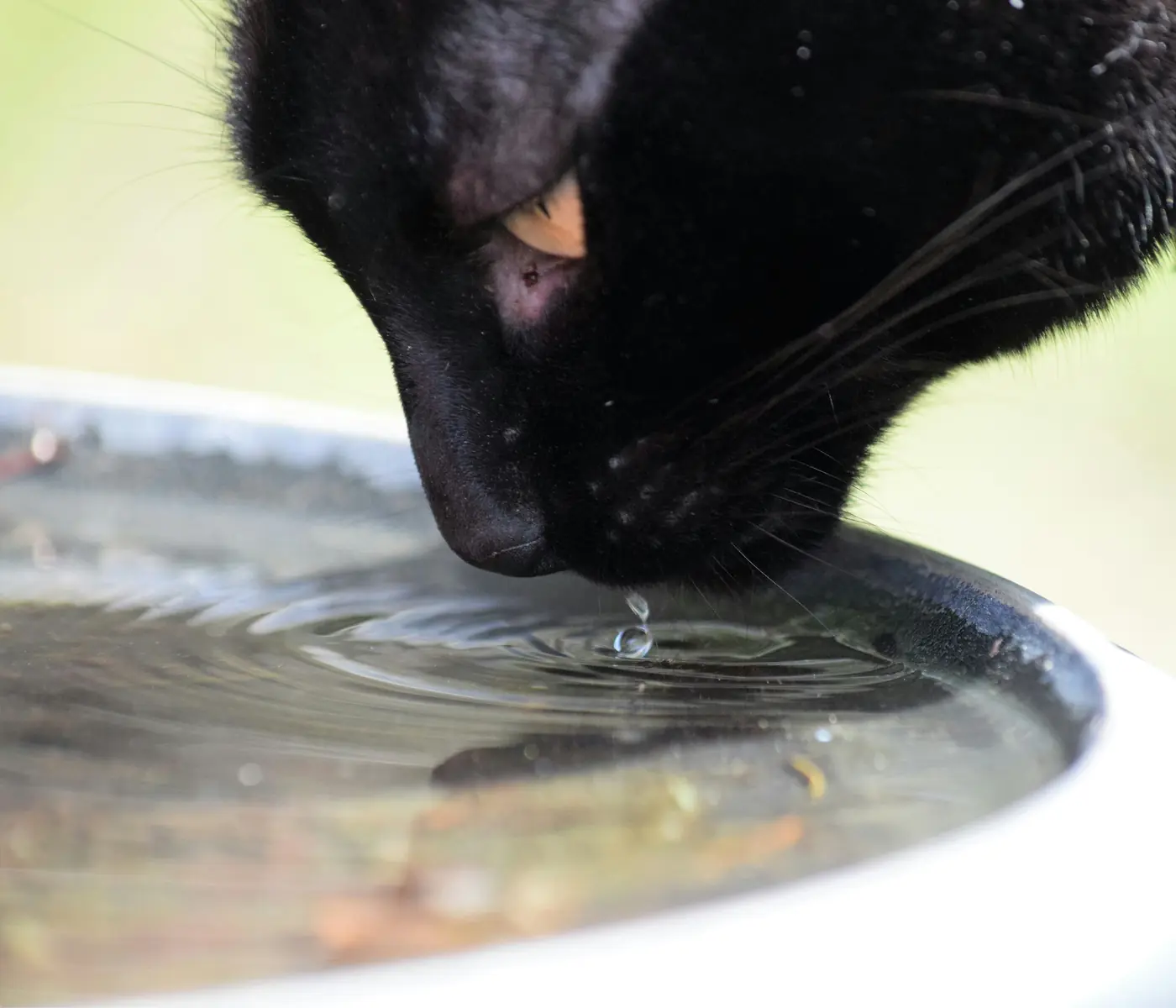
CKD & Increased Thirst & Urination (PU/PD): The Water Crisis
One of the most common early signs of Chronic Kidney Disease (CKD) is a dramatic change in water habits. You might notice your cat drinking from the faucet, the dog's bowl, or even the toilet. Simultaneously, the litter box is suddenly flooded with large, heavy clumps.
In medical terms, this is called PU/PD: Polyuria (excessive urination) and Polydipsia (excessive thirst).
While it seems like the cat is drinking too much and therefore peeing too much, the reality is the exact opposite. The kidneys are leaking water, and the cat is drinking desperately to stay alive.
Here is the medical breakdown of why this happens and how to manage it.
The Physiology: Why Is My Cat Leaking Water?
To understand PU/PD, you have to understand the kidney's job. A healthy kidney is a water-conservation machine. It filters the blood, removes toxins, and then reabsorbs 99% of the water back into the body, producing concentrated, yellow urine.
In CKD, this machinery breaks down due to three specific mechanisms:
1. Loss of Concentrating Ability (The Primary Failure)
-
Nephron Loss: As the filtering units (nephrons) die, the remaining ones have to work overtime. Blood rushes through them so fast (hyperfiltration) that they don't have time to pull the water back out.
-
ADH Resistance: The kidneys stop responding to Anti-Diuretic Hormone (ADH), the chemical signal that tells them to save water.
-
Result: The water rushes right through the kidney and into the bladder. This is Polyuria.
2. Solute Diuresis
-
Because the kidneys are failing, waste products (like Urea) build up in the urine. These particles act like a magnet, pulling even more water out of the body and into the urine.
3. Medullary Washout
-
Healthy kidneys use a "salty" environment deep inside the tissue (the renal medulla) to suck water back into the blood. In CKD, this salt gradient is washed away by the high flow of urine, further destroying the ability to concentrate.
The Compensatory Response (Polydipsia) Because the cat is urinating out all their body water, their blood becomes dangerously thick and concentrated (dehydration). The brain triggers an intense, unquenchable thirst (Polydipsia) to replace the lost fluid.
-
Critical Note: The drinking is a survival mechanism. The cat is trying to outdrink the leak.
How to Confirm: The Numbers Game
1. Urine Specific Gravity (USG)
-
Healthy Cat: > 1.035 (Concentrated).
-
CKD Cat: < 1.035 (Dilute).
-
Isosthenuria (1.008–1.012): This is the danger zone. It means the urine has the exact same gravity as blood plasma. The kidneys are doing absolutely zero work to concentrate it.
2. Quantifying Water Intake
-
Normal: 40–60 mL per kg of body weight per day.
-
PU/PD: > 100 mL/kg/day.
-
At Home Test: If you are filling the water bowl multiple times a day or scooping clumps that break the litter scoop, your cat has PU/PD.
3. Rule Outs Before assuming it is CKD, your vet must rule out other causes of PU/PD:
-
Diabetes Mellitus: Sugar in the urine pulls water with it (Osmotic Diuresis).
-
Hyperthyroidism: Increases blood flow and metabolic rate, driving thirst.
-
Pyometra (In unspayed females): A life-threatening uterine infection.
Management: Keeping Up with the Leak
You cannot "fix" the kidneys' ability to concentrate urine. Once the nephrons are gone, that function is lost forever. The goal of management is to match the intake to the output so the cat does not become dehydrated.
1. The "Wet Food Only" Mandate
-
Dry kibble is only ~10% water. Wet food is ~78% water.
-
A cat on dry food relies entirely on the water bowl to survive. A cat on wet food "eats" most of their water. For a PU/PD cat, this difference is often the line between stability and a crash.
-
Tip: Add extra warm water to the canned food to make a "soup."
2. Hydration Stations
-
Fountains: Cats prefer moving water. It signals "freshness" to their instincts.
-
Variety: Place bowls in different rooms. Use wide, shallow bowls (whisker relief) made of ceramic or glass (plastic can harbor bacteria and smell bad to cats).
3. Subcutaneous Fluids (SQ Fluids)
-
When to start: If the cat physically cannot drink enough to keep up with the urinary loss (e.g., they are chronically constipated, have tacky gums, or skin tenting).
-
What it is: You inject medical-grade electrolyte solution (Lactated Ringer's) under the loose skin of the back. It creates a "hump" of fluid that is slowly absorbed over hours.
-
The Benefit: It bypasses the gut and ensures 100% absorption, taking the pressure off the cat to drink constantly.
4. Sodium Control
-
High sodium diets trigger thirst and can raise blood pressure. Renal diets are restricted in sodium to prevent this.
Warning: Never Restrict Water
This is the most dangerous mistake a caretaker can make.
-
The Myth: "If I take the water away at night, he won't pee outside the box."
-
The Reality: If you restrict water for even a few hours, a CKD cat can spiral into an acute crisis. Their kidneys rely on high volume to flush out toxins. Without water, toxins build up immediately (Uremia), and the cat can die. Always provide unlimited access to fresh water.
Summary for the Caretaker
PU/PD is the hallmark of CKD. It means your cat's internal plumbing has lost its seals.
-
Monitor the Clumps: Sudden increases in urine ball size can signal a drop in kidney function.
-
Facilitate Drinking: Make water appealing and accessible.
-
Check the USG: If the USG is Isosthenic (1.008–1.012), your cat is chemically dehydrated even if they look okay. Talk to your vet about adding wet food or SQ fluids.
References
-
Grauer, G. F. (2005). Clinical manifestations of renal disease. Textbook of Veterinary Internal Medicine.
-
Sparkes, A. H., et al. (2016). ISFM Consensus Guidelines on the Diagnosis and Management of Feline Chronic Kidney Disease. Journal of Feline Medicine and Surgery, 18(3), 219–239.
-
DiBartola, S. P. (2012). Fluid, Electrolyte, and Acid-Base Disorders in Small Animal Practice. Elsevier Health Sciences.
-
Watson, A. D. J., et al. (1981). Urine volume and specific gravity in cats. Australian Veterinary Journal.
