ProductsVIRBAC Nephrodyl Synbiotic Capsules
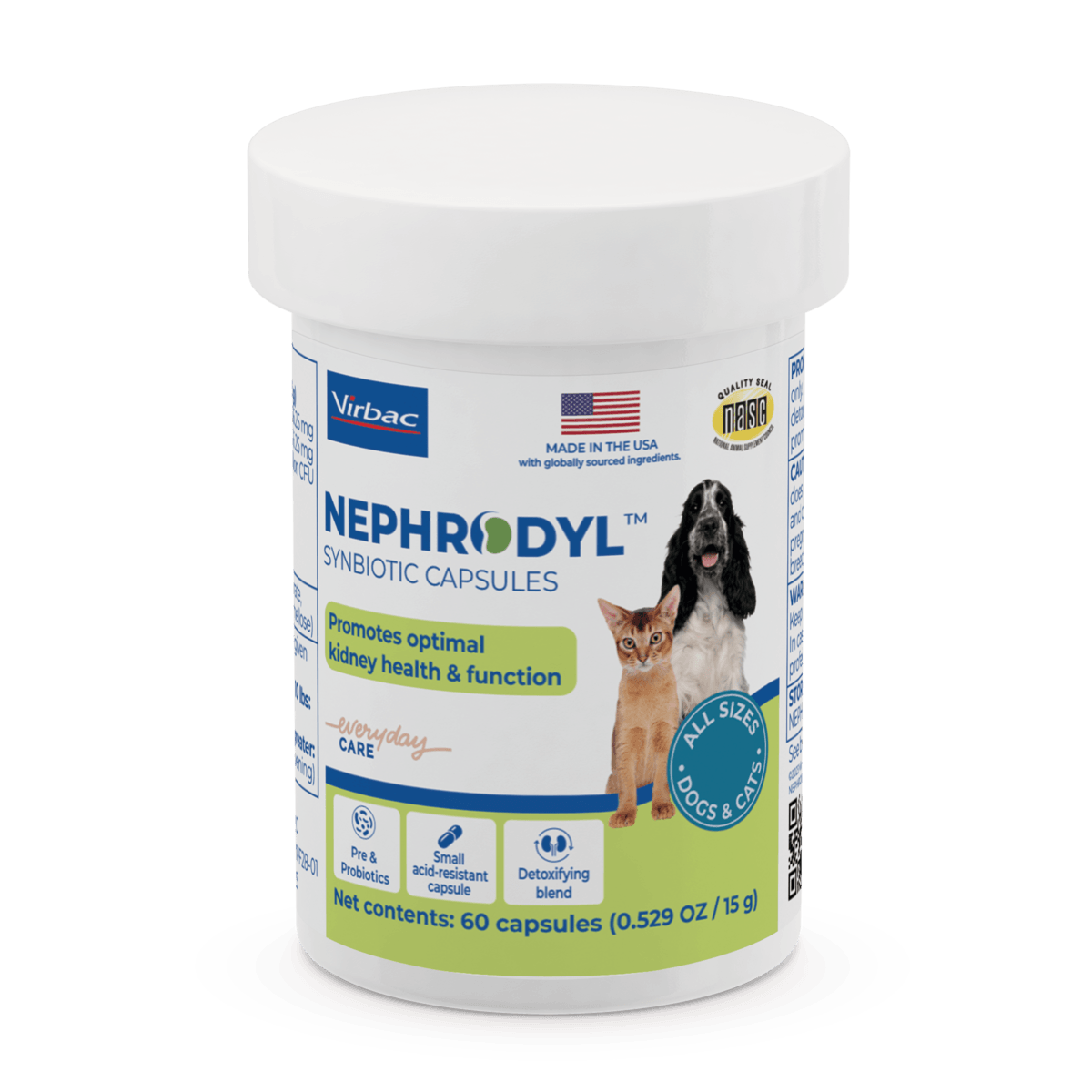
VIRBAC Nephrodyl Synbiotic Capsules
Updated October 25, 2026 | 115 views
Product Overview and Claims
What it is Nephrodyl is a "synbiotic" supplement, meaning it combines probiotics (beneficial bacteria) with prebiotics (food for those bacteria). It is designed to perform "enteric dialysis" - using the gut to help filter out toxins that failing kidneys can no longer handle efficiently.
The Main Promise It aims to metabolize "uremic toxins" (nitrogenous waste) in the intestine before they enter the bloodstream. The goal is to lower BUN (Blood Urea Nitrogen) and Creatinine levels, theoretically reducing the workload on the kidneys and making the cat feel less nauseous and lethargic.
Key Difference vs. Azodyl Nephrodyl is a direct competitor to Vetoquinol's Azodyl. Its main marketing advantages are:
-
Shelf-stable: It does not require refrigeration until after opening (Azodyl requires strict cold-chain shipping).
-
Synbiotic formula: It includes prebiotics (Inulin, Xylo-oligosaccharide) to help the bacteria survive and thrive.
-
Potency: It claims a higher CFU count (22.5 Billion) per capsule compared to standard probiotics.
Formula and Label Transparency
Active Ingredients (per capsule)
-
Proprietary Probiotic Blend (22.5 Billion CFU): S. thermophilus, L. acidophilus, and B. longum. These specific strains are chosen for their ability to consume nitrogen/urea.
-
Prebiotics: Inulin (26.25 mg) and Xylo-oligosaccharide (26.25 mg).
-
Inactive Ingredients: Magnesium stearate, vegetable capsule.
The "Pill" Constraint The capsule is enteric-coated. This means it is designed to survive stomach acid and release the bacteria in the intestine where they do their work. You cannot open, crush, or sprinkle this capsule. If you do, the stomach acid will likely kill the bacteria before they can help your cat.
Dosing Directions
Standard Protocol
-
Under 10 lbs: 1 capsule daily.
-
Over 10 lbs: 1 capsule twice daily (morning and evening).
-
Administration: Must be given whole. The manufacturer states it can be given with or without food, but giving it on a relatively empty stomach (1 hour before feeding) is often the "gold standard" recommendation for this type of supplement to maximize efficacy, though Virbac's label is more flexible than Azodyl's.
Safety Cautions & Side Effects
Gastrointestinal Adjustment Because this introduces billions of bacteria and prebiotic fiber into the gut, some cats experience bloating, gas, or loose stools during the first week.
The "Whole Pill" Risk The capsule size is moderate (approx. size of a Tylenol). For a small or nauseous CKD cat, forcing a pill can cause significant stress or esophageal irritation. If your cat is prone to vomiting, a pill sitting in the stomach may trigger a vomit reflex.
Contraindications
-
Not proven safe for pregnant or breeding animals.
-
Stop if the animal's condition worsens (vomiting, lethargy).
Real-World User Feedback
The Good: Convenience & Stabilization
-
Easier Logistics: Owners love that they don't have to worry about the ice pack melting during shipping (a huge issue with Azodyl).
-
Efficacy: Many users report their cats maintaining stable kidney values and good appetite. It is often cited as a "cheaper and more stable" alternative to Azodyl.
The Bad: The "Pilling" Battle
-
Hard to Swallow: The absolute biggest complaint is the inability to open the capsule. Many owners buy it hoping to sprinkle it on food, only to read the label and realize they have to pill their cat daily. For many cat owners, this is a deal-breaker.
-
Size: The capsule is considered slightly large for smaller cats (under 7 lbs).
Scientific Reality Check While the concept of enteric dialysis is sound, clinical studies on these products (in general) have been mixed. Some studies show a reduction in uremic toxins, while others show no statistically significant difference in blood values compared to placebo. However, "clinical" improvement (the cat acting better) is often reported even if labs don't shift dramatically.
Expert Verdict
Bottom Line Virbac Nephrodyl is a modernized, more stable version of Azodyl. The addition of prebiotics and the lack of cold-shipping requirements make it a superior choice logistically. However, it has one fatal flaw for many owners: you must be able to pill your cat.
Who should avoid this
-
The "Impossible to Pill" Cat: If your cat bites, scratches, or foams when pilled, the stress of daily administration will likely do more harm to their kidneys (via blood pressure spikes) than the probiotic will do good.
-
Cats with swallowing difficulties: The capsule is not tiny.
How to trial safely
-
Assess Pilling Skills: Be honest with yourself. Can you give a pill daily without a rodeo?
-
Start Slowly: If you have a sensitive cat, start once daily even if they are >10 lbs to monitor for gas/diarrhea.
-
Monitor Values: Check BUN/Creatinine after 4 weeks. If values are stable and the cat is eating well, it's worth continuing. If values are rising and pilling is a fight, drop it.
Disclaimer: This content is for educational purposes only and does not constitute veterinary medical advice. Supplements are not regulated by the FDA to the same standards as pharmaceuticals; "natural" does not mean "safe," and ingredients or potency can vary between batches. Always consult with your primary care veterinarian or a veterinary internal medicine specialist regarding your cat’s specific condition and potential interactions with prescribed medications.