ProductsAminAvast Kidney Support Supplement
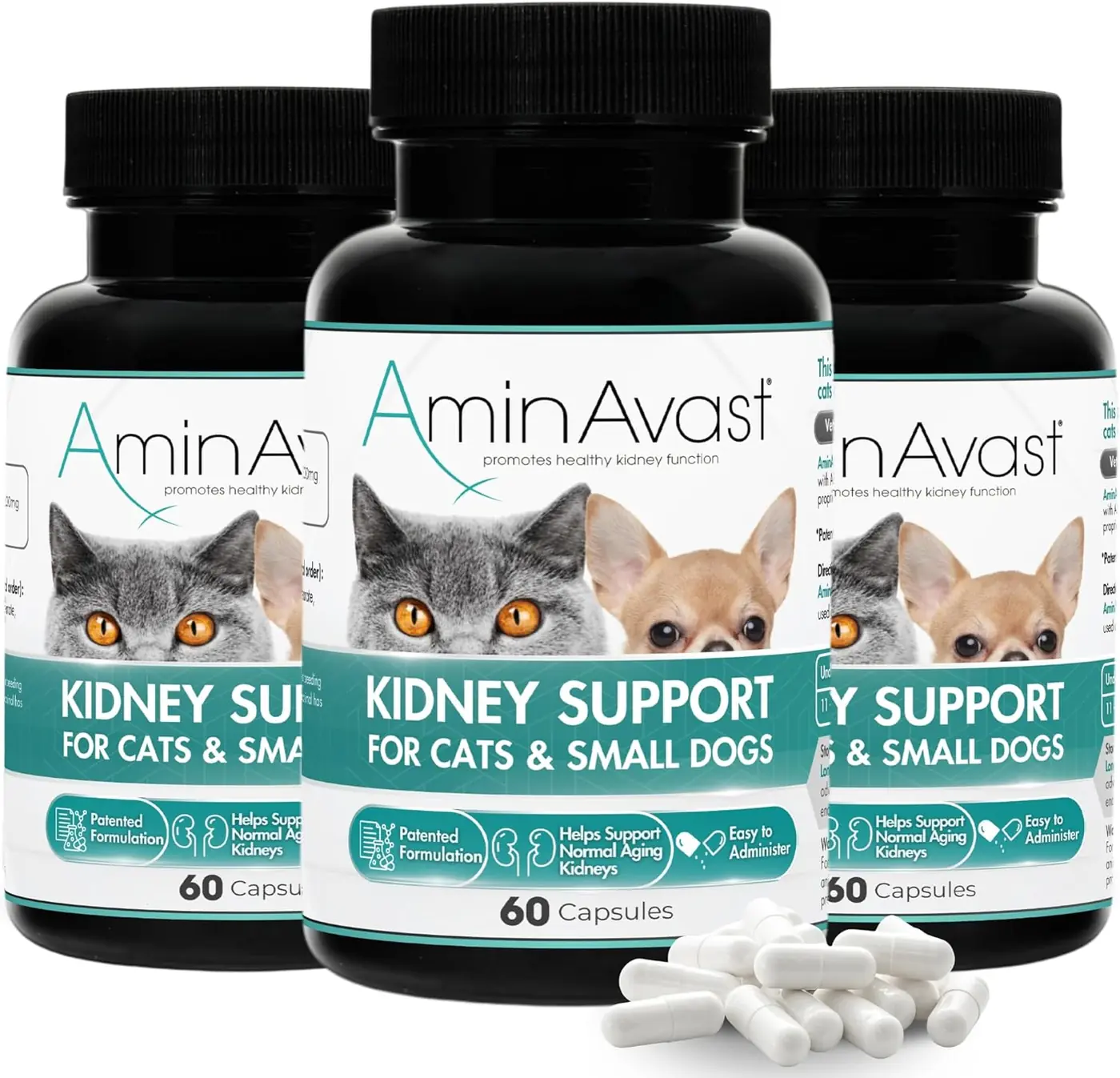
AminAvast Kidney Support Supplement
Updated October 25, 2026 | 90 views
Product Overview and Claims
What it is AminAvast is a nutritional supplement containing a patented blend of amino acids and peptides (AB070597). Unlike probiotics (Azodyl) or phosphorus binders (Epakitin), it works by providing specific "building blocks" intended to support the structural integrity of kidney cells and reduce oxidative stress.
The "Name Change" Red Flag You may see older references to RenAvast. The product was rebranded to AminAvast after the FDA cited the manufacturer for making unproven medical claims about "curing" or "treating" kidney disease. While the formula is the same, this history is a reminder to view their boldest marketing claims with healthy skepticism.
Formula and Label Transparency
Active Ingredients (per 300 mg capsule)
-
AB070597 (Proprietary Blend): Includes L-Aspartic acid, L-Carnosine, L-Glutamic acid, L-Glutamine, Glycine, L-Arginine, and L-Histidine.
-
Mechanism: The manufacturer claims these specific amino acids help maintain renal cell health and optimize blood flow (vasodilation) within the kidney, though independent peer-reviewed data is limited compared to standard drugs.
Inactive Ingredients Maltodextrin, Magnesium Stearate, Stearic Acid. (Gluten-free).
Dosing Directions
Standard Protocol
-
Under 10 lbs: 1 capsule twice daily.
-
11–20 lbs: 2 capsules twice daily.
-
Administration: It comes in a "sprinkle capsule." You are intended to break it open and mix the powder with a small amount of wet food. It does not need refrigeration.
Safety Cautions & Clinical Nuance
The "Protein" Paradox A common question from owners is: "If my cat is on a low-protein kidney diet, why am I feeding them amino acids (protein)?" Expert View: The amount of protein in these tiny capsules is negligible compared to a meal. It typically does not spike BUN (blood urea nitrogen) and is generally considered safe to use alongside a renal prescription diet.
Contraindications
-
Sensitive Stomachs: While "tasteless," the amino acids can be rich. Start with a pinch, not the full dose, if your cat vomits easily.
-
No known drug interactions: It can be safely given with subcutaneous fluids, benazepril/telmisartan, and phosphate binders.
Real-World User Feedback
The Good: "The Coat and Energy Shift"
-
Physical changes: The most consistent user report isn't a miraculous drop in kidney values, but physical improvements. Owners frequently note that a cat's coat stops looking "clumped" or "greasy" and becomes soft again within 3–4 weeks.
-
Weight Maintenance: Many users report their cats stop losing weight as rapidly, even if their appetite remains variable.
The Bad: It’s Not Truly "Tasteless"
-
Detection: The manufacturer claims it is flavorless, but cats have better noses than we do. About 20–30% of users report their cat sniffing the food and walking away.
-
The "Paste" Hack: Successful users often mix the powder with a tiny amount of Churu or baby food (meat only) to create a paste, rather than ruining a whole bowl of expensive kidney food.
The Ugly: Rapid Decline Anecdotes
-
While rare, there are forum reports of cats vomiting repeatedly after the first few doses, leading to dehydration and a "crash." This is likely due to the cat's individual sensitivity rather than a toxic ingredient, but it underscores the need to start slowly.
Expert Verdict
Bottom Line AminAvast is a safe, middle-of-the-road support option. It is less logistically difficult than Azodyl (no refrigeration/pilling) and has a better track record for "visible" improvements (coat/energy) than many herbal drops. However, do not expect it to "fix" high creatinine numbers on its own.
Who is this best for?
-
Early Stage CKD (Stage 1–2): Great for preserving muscle mass and coat condition when the cat is still eating well.
-
The "Un-Pillable" Cat: If you cannot pill your cat, this sprinkle capsule is one of the few viable options.
How to trial safely
-
The Smell Test: Open a capsule and mix a tiny pinch into a treat. If your cat eats it, proceed.
-
Ramp Up: Give 1 capsule daily for 3 days before moving to the full "twice daily" dose to avoid shocking the stomach.
-
Monitor: Watch for vomiting. If the cat vomits within an hour of eating the supplement, discontinue.
Disclaimer: This content is for educational purposes only and does not constitute veterinary medical advice. Supplements are not regulated by the FDA to the same standards as pharmaceuticals; "natural" does not mean "safe," and ingredients or potency can vary between batches. Always consult with your primary care veterinarian or a veterinary internal medicine specialist regarding your cat’s specific condition and potential interactions with prescribed medications.