ProductsVetoquinol Epakitin Chitosin-Based Phosphate Binder
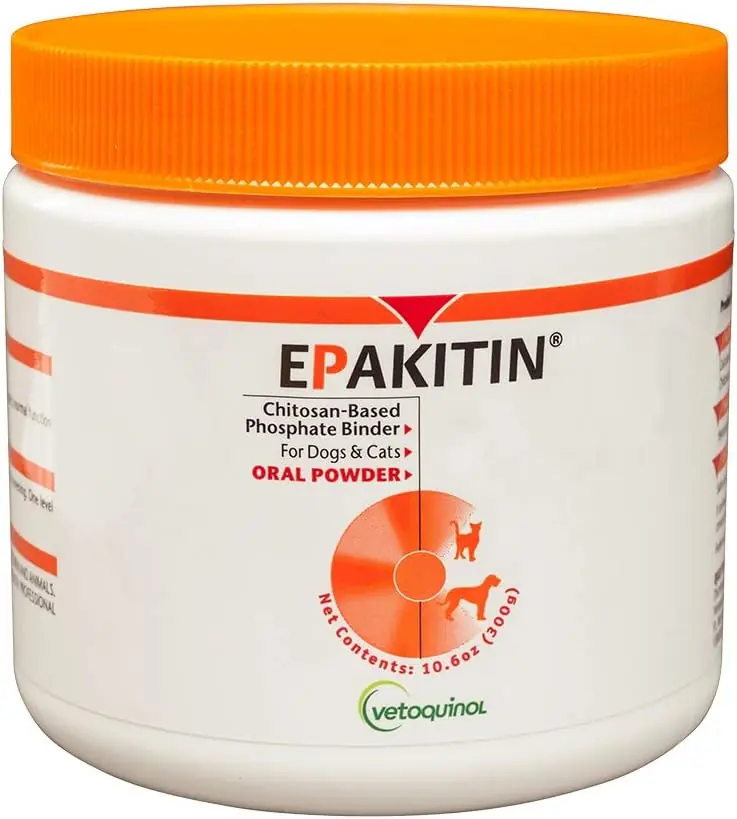
Vetoquinol Epakitin Chitosin-Based Phosphate Binder
Updated October 25, 2026 | 74 views
Product Overview and Mechanism
What it is Epakitin is a powdered "phosphate binder." High phosphorus is one of the most dangerous complications of Chronic Kidney Disease (CKD) because it accelerates kidney damage and makes cats feel terrible. Epakitin works like a sponge in the gut, binding to phosphorus in food so your cat poops it out instead of absorbing it.
Key Distinction: "The Calcium-Based Binder" Unlike stronger medical binders (like Aluminum Hydroxide), Epakitin uses chitosan and calcium carbonate.
-
Chitosan: A natural extract from crab/shrimp shells that absorbs toxins.
-
Calcium Carbonate: Binds phosphorus but adds calcium to the body.
Formula and Label Transparency
Active Ingredients
-
Lactose (milk sugar) – Used as a filler and palatable base.
-
Calcium Carbonate – The binding agent.
-
Chitosan – The toxin absorber.
-
Hydrolyzed Soy Protein – Added for flavor.
Dietary Red Flags
-
Lactose: Most adult cats are lactose intolerant. While the amount is small, this can cause soft stools in sensitive cats.
-
Soy: A potential allergen for some cats.
-
Sugar: The lactose content means this product adds sugar/carbs, which is not ideal for unregulated diabetic cats.
Dosing Directions
Standard Protocol
-
Dose: 1 gram per 10 lbs (5 kg) of body weight, given orally twice daily.
-
Administration: It comes as a fine white powder with a small measuring spoon included. You must mix it with food at mealtime. It does not work if given on an empty stomach because it needs to mix with the food to bind the phosphorus inside that meal.
Safety Cautions & Clinical Nuance
The "Hypercalcemia" Risk Because this is a calcium-based binder, it can raise your cat's blood calcium levels.
-
Danger Zone: If your cat already has high blood calcium (Hypercalcemia), do not use this product. High calcium + high phosphorus can cause "mineralization" (turning soft tissue to stone) in the kidneys, making the disease faster.
-
Requirement: You must monitor blood calcium levels (via Total Calcium or Ionized Calcium labs) while using this.
Potency vs. Aluminum Epakitin is considered a "gentle" or "moderate" binder.
-
Best for: Early-to-mid stage CKD where phosphorus is only slightly elevated.
-
Not enough for: Advanced CKD with very high phosphorus levels (> 7-8 mg/dL). In those cases, vets usually switch to Aluminum Hydroxide, which is more potent and doesn't risk raising calcium.
Real-World User Feedback
The Good: Palatability Wins
-
Texture: Unlike gritty aluminum powder, Epakitin is a fine, almost flour-like powder. It mixes easily into wet food without altering the texture much.
-
Acceptance: Many cats accept it surprisingly well. Some owners even claim their cats prefer food with Epakitin because of the lactose/soy flavor base.
The Bad: The "Plastic" Smell & Batch Issues
-
Inconsistency: Recent user reports (late 2024–2025) have noted batch inconsistencies where some tubs have a strong chemical or "plastic" smell compared to previous neutral-smelling batches.
-
The "Poop" Factor: Because of the lactose and chitosan, a common side effect is larger, softer, or more frequent stools.
The Ugly: Cost
-
Price: It is significantly more expensive per dose than generic Aluminum Hydroxide powder. For a large cat or long-term use, the monthly cost adds up quickly.
Expert Verdict
Bottom Line Epakitin is an excellent "starter binder" for cats in Stage 2 or early Stage 3 CKD who need a little help lowering phosphorus but are picky eaters. Its palatability is its biggest strength.
Who should avoid this
-
Cats with High Calcium: Absolute contraindication.
-
Dairy-Sensitive Cats: If your cat gets diarrhea easily, the lactose might trigger it.
-
Late-Stage CKD: It is likely too weak to control massive phosphorus spikes in Stage 4.
How to trial safely
-
Check Labs: Confirm your cat's calcium is normal before buying.
-
Start Slow: Mix a pinch into food to ensure your cat doesn't reject the bowl.
-
Recheck: You need a blood test 2–4 weeks after starting to see if it (A) lowered the phosphorus and (B) didn't raise the calcium.
Disclaimer: This content is for educational purposes only and does not constitute veterinary medical advice. Supplements are not regulated by the FDA to the same standards as pharmaceuticals; "natural" does not mean "safe," and ingredients or potency can vary between batches. Always consult with your primary care veterinarian or a veterinary internal medicine specialist regarding your cat’s specific condition and potential interactions with prescribed medications.