ProductsInfinite Labs Liquid Vitamin B-12 for Dogs and Cats
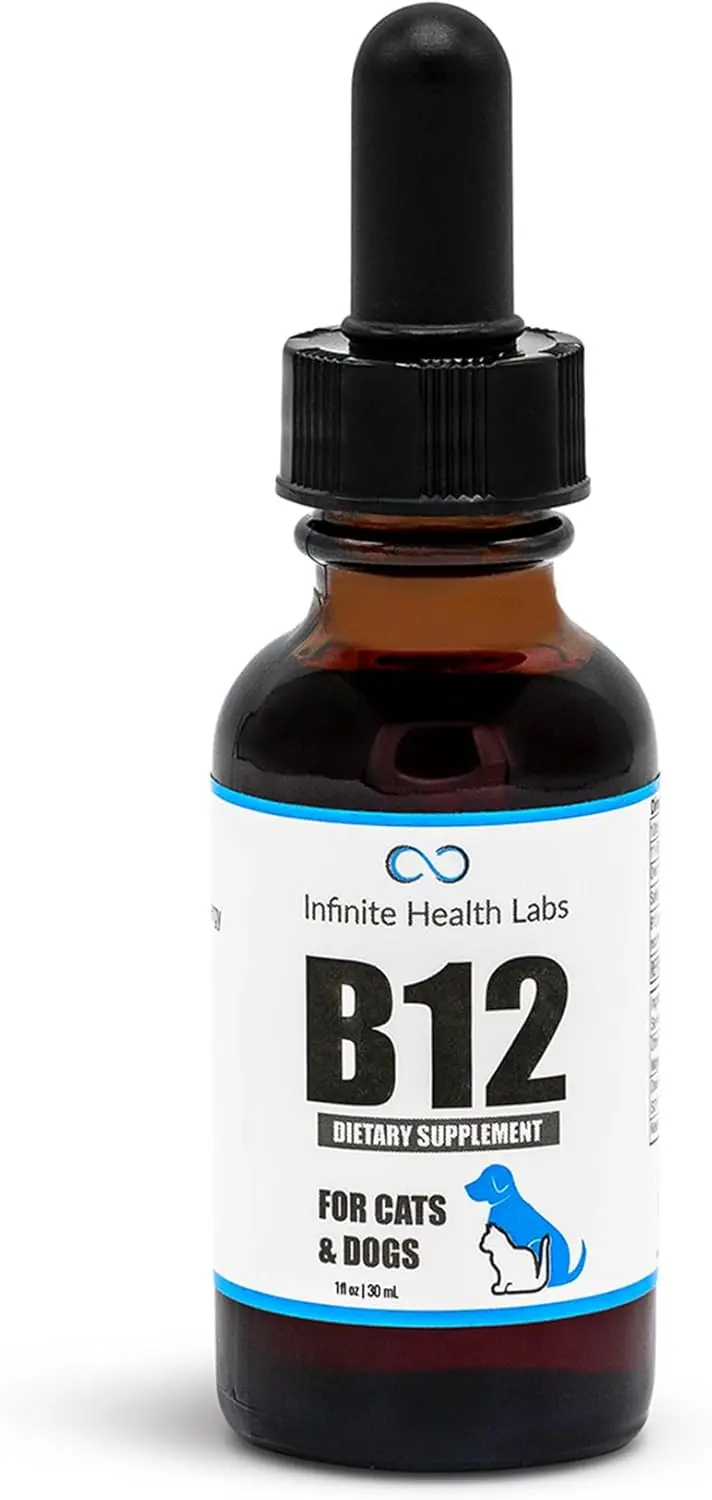
Infinite Labs Liquid Vitamin B-12 for Dogs and Cats
Updated October 25, 2026 | 52 views
Product Overview and Formula
What it is This is a concentrated liquid Vitamin B12 supplement. Unlike "complex" multivitamins (like Amino B-Plex) that contain a mix of many B vitamins, this product focuses solely on B12 (Cobalamin).
The "Methyl" Advantage It uses Methylcobalamin, which is the "active" form of B12 found in nature.
-
Why this matters: Many cheap supplements use Cyanocobalamin (synthetic), which the body must convert before using. Methylcobalamin is bioavailable immediately, making it superior for cats with compromised systems (like CKD or IBD) who may struggle with absorption.
Formula Snapshot
-
Active Ingredient: Methylcobalamin (1000 mcg per serving/dropper).
-
Inactive Ingredients: Purified water, Organic Vegetable Glycerin, Potassium Sorbate (preservative).
-
No Sugar/Alcohol: Crucially, unlike many pet syrups, this does not list fructose or corn syrup, making it safer for diabetics.
Clinical Use Case: Why B12?
The CKD Connection Cats with Chronic Kidney Disease (CKD) naturally pee out water-soluble vitamins at a high rate due to increased urination (polyuria). The Symptoms of Deficiency:
-
Anemia (low red blood cells)
-
Severe lethargy / weakness
-
Poor appetite
-
Gastrointestinal issues (vomiting/diarrhea)
Oral vs. Injection Historically, vets used injections (shot under the skin) because oral B12 was thought to be poorly absorbed. However, newer research suggests that high-dose daily oral methylcobalamin can effectively raise B12 levels in cats, offering a needle-free alternative for maintenance.
Dosing Directions & Reality
Standard Protocol
-
Dose: The bottle often suggests "1 dropper" (approx 1 ml) for larger animals.
-
For Cats: The label is often vague on cat specifics.
-
Expert adjustment: A common feline maintenance dose for methylcobalamin is 250 mcg to 500 mcg daily. Since this product is 1000 mcg per dropper, you typically only need 1/4 to 1/2 of a dropper daily for a cat.
-
-
Administration: It is a pinkish/red liquid. Can be dropped on food or directly in the mouth.
Safety Cautions
Potassium Sorbate Contains potassium sorbate as a preservative. While generally safe, extremely sensitive cats may drool if they taste it directly.
Red Urine Scare B12 is intensely red. If you spill it, it stains. Occasionally, if you give a high dose, you may notice the cat's urine turning slightly pink/orange. This is harmless (just the excess vitamin leaving the body), but it can look like blood to a worried owner.
Not a Cure for Severe Anemia If your cat has severe non-regenerative anemia, this oral supplement is likely too slow. Urgent cases need veterinary injections (B12 + Iron + potentially EPO). Use this for maintenance or mild deficiency only.
Real-World User Feedback
The Good: "The Pink Energy"
-
Vitality: Owners consistently report a "perk up" in energy within 1–2 weeks.
-
Taste: It is naturally sweet (due to glycerin) without added sugar. Most cats accept it mixed in wet food without complaint.
-
Value: Because it is highly concentrated (and cats need small doses), one bottle lasts a very long time compared to pet-specific marketed brands.
The Bad: The Dropper & Stain
-
Mess: The liquid is bright red and stains instantly. If your cat shakes its head while you are dosing, your walls/carpet will be pink.
-
Dropper Measurement: The dropper often lacks clear "ml" markings, making it hard to measure exactly "0.25 ml." Users often have to buy a separate oral syringe for precision.
Expert Verdict
Bottom Line This is an excellent, cost-effective source of high-quality B12. It is cleaner than many "pet syrups" (no fructose) and uses the superior Methylcobalamin form. It is a fantastic option for CKD cats prone to B12 deficiency who cannot tolerate weekly vet injections.
Who is this best for?
-
CKD Cats with low appetite/energy: A safe first step to try and boost vitality.
-
Diabetic Cats: Safe due to lack of sugar.
-
IBD Cats: Helpful as they often have malabsorption issues in the gut.
How to trial safely
-
Buy a Syringe: Don't trust the glass dropper. Buy a 1ml oral syringe to measure exactly 0.25–0.5 ml.
-
Mix, Don't Squirt: Mix it into a small amount of wet food to avoid the "head shake" stain disaster.
-
Watch the Pee: Don't panic if urine color changes slightly; it means the body is flushing the excess.
Disclaimer: This content is for educational purposes only and does not constitute veterinary medical advice. Supplements are not regulated by the FDA to the same standards as pharmaceuticals; "natural" does not mean "safe," and ingredients or potency can vary between batches. Always consult with your primary care veterinarian or a veterinary internal medicine specialist regarding your cat’s specific condition and potential interactions with prescribed medications.