ProductsHerbal Terra LLC Rehmannia Glycerite
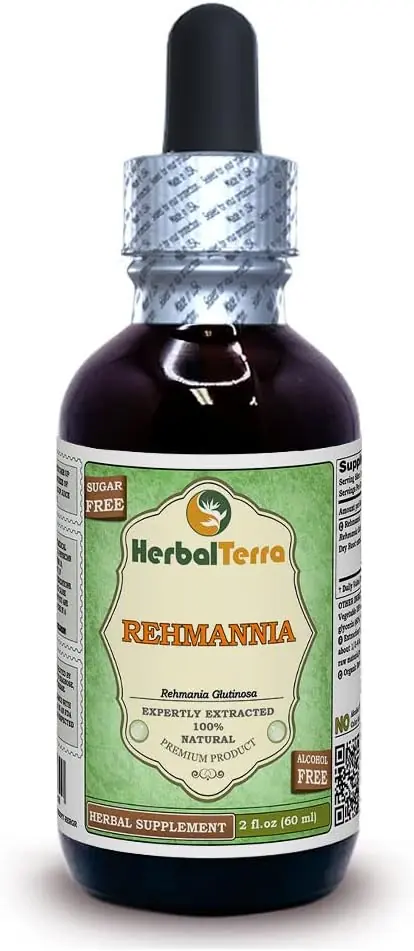
Herbal Terra LLC Rehmannia Glycerite
Updated October 25, 2026 | 46 views
Product Overview and Mechanism
What it is This is a liquid herbal extract of a single ingredient: Rehmannia root (Rehmannia glutinosa). In Traditional Chinese Medicine (TCM), Rehmannia is known as "the kidney's own food." It is traditionally used to increase renal blood flow ("nourish kidney yin") and modulate the immune system.
Key Distinction: Single Herb vs. Formula Most "Rehmannia for CKD" success stories you read online refer to a blend called Rehmannia 6 or Rehmannia 8 (which includes other herbs like Alisma and Poria to help digestion). This product is the single herb only. While potent, using Rehmannia alone can be "heavy" and hard to digest for some cats. It is often best used by owners who are mixing their own custom protocol or under the direction of a holistic vet who wants to isolate this specific ingredient.
The "Alcohol-Free" Essential This product is a Glycerite, meaning the herb is extracted in vegetable glycerin and water.
-
Crucial: You must never buy standard tinctures for cats, as they use ethyl alcohol (ethanol), which is toxic to felines. This Herbal Terra product is safe because it is 100% alcohol-free.
Formula and Label Transparency
Active Ingredients
-
Organic Rehmannia Dried Root (Rehmannia glutinosa)
-
Menstruum Ratio: Typically 1:3 (verify on your specific bottle). This means 1 gram of herb is used to make 3 ml of liquid.
Inactive Ingredients
-
Vegetable Glycerin: Acts as the solvent and preservative. It is sweet and generally safe, though it technically counts as a carbohydrate.
-
Distilled Water.
Transparency Score: High There are no "proprietary blends" hiding the strength. You know exactly what you are getting.
Dosing Directions & Math
The Challenge This is a human supplement, so the bottle will say something like "Shake well, take 20-30 drops." Do not give this dose to a cat.
Typical Feline Dosing (General Guideline) Because this is a concentrated extract, you need very little.
-
Standard Cat Dose: 0.25 ml to 0.5 ml (approx. 5–10 drops) twice daily.
-
Start Low: Rehmannia is "sticky" and rich. Start with just 3 drops twice daily mixed into food to ensure it doesn't cause loose stools, then work your way up over 2 weeks.
Important Disclaimer: Always consult your veterinarian for dosing specifically for your cat. Factors like weight, age, and kidney stage can significantly alter the safe dosage required.
Safety Cautions & Side Effects
The "Loose Stool" Risk In TCM terms, Rehmannia is "cloying" (greasy/heavy). If given alone without supporting herbs to help digestion, it can cause diarrhea or soft stools in cats with sensitive stomachs. If this happens, reduce the dose or switch to a "Rehmannia 6" formula.
Hypoglycemia (Low Blood Sugar) Rehmannia can lower blood sugar levels.
-
Diabetic Cats: Use with extreme caution. It may reduce the need for insulin, leading to a hypoglycemic event if you aren't monitoring glucose closely.
-
Anorexic Cats: Do not give this to a cat who is refusing to eat.
Contraindications
-
Diarrhea: Do not use if the cat currently has diarrhea. It will likely make it worse.
-
Pregnancy: Not proven safe.
Real-World User Feedback
The Good: "The Hydration Helper"
-
Thirst Reduction: Owners of CKD cats often report that after 3–4 weeks, their cats seem less desperately thirsty (polydipsia) and their urine clumps become smaller and more normal, suggesting the kidneys are concentrating urine slightly better.
-
Coat Quality: A classic sign of Rehmannia working is the return of a soft, non-clumped coat and reduced dandruff.
The Bad: The "Sticky" Mess
-
Texture: The liquid is thick, dark, and sticky (like molasses). It is messy to handle.
-
Taste: It has a sweet, earthy, slightly burnt taste. About 60% of cats accept it in food because of the sweetness, but 40% find the earthy smell offensive.
The Confused Buyer
-
Many users buy this thinking it is the "Rehmannia 8" formula recommended in forums, only to realize later it is missing the other 7 herbs. While it still helps, it lacks the "draining" herbs that prevent fluid retention.
Expert Verdict
Bottom Line Herbal Terra Rehmannia Glycerite is a high-quality, safe, alcohol-free source of this powerhouse herb. However, for a typical CKD cat, it is often better to use a "Rehmannia 6" or "Rehmannia 8" blend rather than this single herb, as the blend is balanced to prevent stomach upset.
Who is this best for?
-
The Customizer: Owners working with a holistic vet who prescribed only Rehmannia.
-
Constipated CKD Cats: Since the single herb can loosen stools, it is actually safer for constipated cats than those prone to diarrhea.
How to trial safely
-
Check the Poop: If your cat has soft serve stool, do not start this.
-
The "Drop" Test: Start with 3 drops in a teaspoon of delectable wet food (like fancy feast or tuna water).
-
Monitor: If the cat eats it and stool remains firm after 3 days, increase to 0.25 ml twice daily.
Product Data
-
Herbal Terra. (n.d.). Rehmannia (Rehmannia glutinosa) Glycerite, Organic Dried Roots Alcohol-Free Liquid Extract. Herbal Terra LLC. Retrieved January 3, 2026, from https://herbalterra.com
Veterinary & TCM Pharmacology
-
Veterinary Use & Formula Distinctions (Rehmannia 6 vs. 8):
-
Xie, H., & Preast, V. (2013). Xie’s Chinese Veterinary Herbology (1st ed.). Wiley-Blackwell. (Source for the "cloying" nature of single Rehmannia and the need for draining herbs in cats).
-
WSAVA World Congress Proceedings. (2018). How to Use Acupuncture and Herbal Medicine for Treatment of Chronic Renal Failure. Veterinary Information Network. Retrieved from https://www.vin.com
-
-
Renal Pharmacology & Immune Modulation:
-
Zhang, R. X., Li, M. X., & Jia, Z. P. (2008). Rehmannia glutinosa: Review of botany, chemistry and pharmacology. Journal of Ethnopharmacology, 117(2), 199–214. https://doi.org/10.1016/j.jep.2008.02.018
-
-
Hypoglycemic (Blood Sugar) Mechanisms:
-
Zhang, R., Zhou, J., Jia, Z., & Zhang, Y. (2004). Hypoglycemic effect of Rehmannia glutinosa oligosaccharide in hyperglycemic and alloxan-induced diabetic rats. Journal of Ethnopharmacology, 90(1), 39–43. https://doi.org/10.1016/j.jep.2003.09.019
-
-
TCM "Kidney Yin" & Safety Profile:
-
Thorne Vet. (n.d.). Prepared Rehmannia Root (Rehmannia glutinosa): Ingredient Overview. Retrieved January 3, 2026, from https://thornevet.com
-
Disclaimer: This content is for educational purposes only and does not constitute veterinary medical advice. Supplements are not regulated by the FDA to the same standards as pharmaceuticals; "natural" does not mean "safe," and ingredients or potency can vary between batches. Always consult with your primary care veterinarian or a veterinary internal medicine specialist regarding your cat’s specific condition and potential interactions with prescribed medications.