ProductsKan Herbs Company Rehmannia Eight Combination
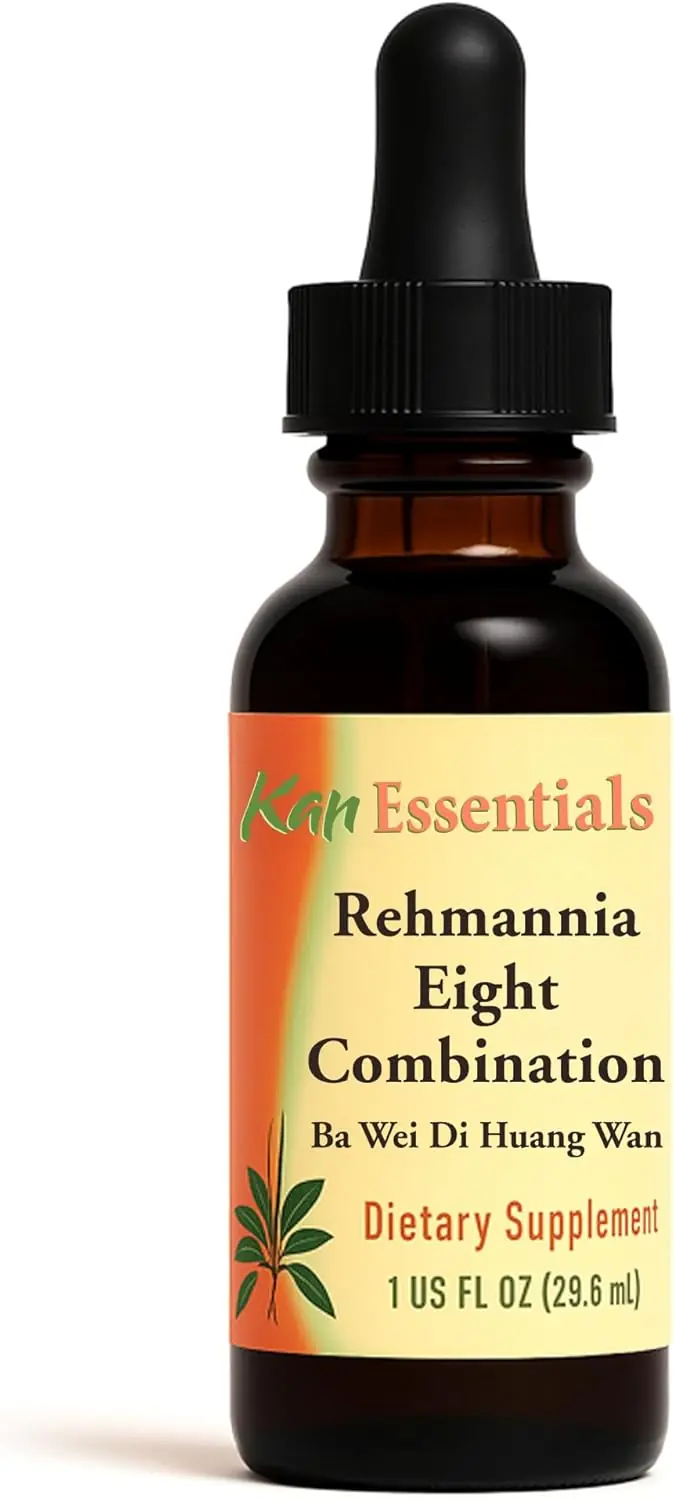
Kan Herbs Company Rehmannia Eight Combination
Updated October 25, 2026 | 78 views
Product Overview and Mechanism
What it is This is a liquid herbal blend based on the classical Traditional Chinese Medicine (TCM) formula Ba Wei Di Huang Wan (Eight-Flavor Rehmannia Pill). Unlike single-herb extracts, this is a complex formula containing 8 specific herbs working in synergy.
The "Heating" Difference (Critical) In TCM, kidney failure presents in different "patterns."
-
Rehmannia 6 (Liu Wei): Nourishing and cooling. Best for "Yin Deficiency" (cats that are thirsty, restless, panting, or have dry skin).
-
Rehmannia 8 (This Product): Warming and energizing. It adds Cinnamon and Aconite to the base formula to treat "Yang Deficiency."
-
Target Patient: This is best for the geriatric, cold cat. Signs include: seeking heat sources (sleeping on vents), cold ears/paws, peeing large amounts of clear urine, and extreme lethargy/weakness in the hind legs.
Formula and Label Transparency
Active Ingredients (The "8" Herbs)
-
Prepared Rehmannia (Shu Di Huang): The foundation herb for kidney support.
-
Cornus (Shan Zhu Yu): Retains fluids (helps stop excessive urination).
-
Dioscorea (Shan Yao): Supports digestion.
-
Alisma (Ze Xie): Drains dampness/excess fluid.
-
Poria (Fu Ling): Supports fluid balance.
-
Moutan (Mu Dan Pi): Clears heat.
-
Cinnamon Bark (Rou Gui): Strongly warming; improves circulation.
-
Processed Aconite (Fu Zi): Restores "fire" (vitality) and metabolism.
Safety Note on Aconite Raw Aconite is toxic. In TCM products, it must be "prepared" (processed) to remove toxicity while keeping medicinal value. Kan Herbs is a reputable, GMP-certified company known for rigorous testing, which is vital when using potent ingredients like Aconite.
Inactive Ingredients
-
Filtered Water
-
Vegetable Glycerin
-
Note: Ensure you are buying the "Kan Essentials for Pets" or specifically labeled alcohol-free version. Kan also sells human tinctures with alcohol; avoid the alcohol versions for cats.
Dosing Directions
Standard Protocol Kan Herbs typically provides a weight-based chart, but general holistic vet guidelines for liquid extracts are:
-
Cats: 0.25 ml to 0.5 ml twice daily.
-
Administration: This formula is potent and flavorful. It is rarely eaten willingly in food. Most owners must syringe it directly or mix it into a strong-tasting treat (like sardines or liver paste).
Important Disclaimer: Always consult your veterinarian for dosing specifically for your cat. Because this formula changes body temperature and metabolism, the dose must be precise.
Safety Cautions & "Pattern" Warnings
The "Fire" Warning (Contraindications) You must not give Rehmannia 8 to a cat with signs of "Heat" or active infection.
-
Do NOT use if: Your cat has a red tongue, is panting, has a fever, is drinking excessive amounts of water due to heat (rather than just kidney failure), or has constipation with dry/hard stool. Adding Cinnamon/Aconite to a "hot" cat will make them worse (restless, agitated).
Stomach Sensitivity The "warming" herbs can sometimes irritate the stomach. If vomiting occurs, stop immediately.
Real-World User Feedback
The Good: "The Spark is Back"
-
Mobility: Owners of very old, frail cats with hind-leg weakness often report a significant improvement in mobility and "spark" within 2–3 weeks.
-
Incontinence: It is frequently praised for helping older cats who "leak" urine while sleeping or have lost bladder control.
The Bad: The Smell and Taste
-
Palatability: This is one of the hardest supplements to disguise. It has a strong, spicy, medicinal smell (due to the Cinnamon and Aconite). Rejection rates are high if mixed in standard cat food.
-
"Too Hot": Some owners report their cats becoming agitated or meowing excessively at night, a sign that the formula was too stimulating ("too hot") for their specific condition.
Expert Verdict
Bottom Line Kan Herbs Rehmannia Eight is a professional-grade, potent formula for the frail, cold, end-stage geriatric cat. It is powerful medicine, not a gentle vitamin.
Who is this best for?
-
The "Cold" Cat: Cats who sleep on heating pads, have cold ears, and are weak in the rear legs.
-
Incontinence: Cats dribbling clear urine.
Who should avoid this?
-
The "Hot" Cat: Cats who seek cool floors, pant, or have high blood pressure (hypertension) that is uncontrolled, as the warming ingredients can theoretically raise pressure further.
-
DIYers: Do not guess between Rehmannia 6 and 8. If you pick the wrong one, you can unbalance your cat. Ask a vet which "Pattern" your cat fits.
How to trial safely
-
Verify the Pattern: Check your cat's ears and tongue. If the tongue is bright red, skip this. If it is pale/purple and wet, this might be the right match.
-
Start Tiny: The taste is strong. Start with 1 drop in food to test tolerance.
-
Watch Behavior: If your cat becomes restless, aggressive, or stops sleeping, discontinue immediately.
References
-
Kan Herbs. (n.d.). Kan Essentials for Pets: Rehmannia Eight Combination. Kan Herbs Company. Retrieved January 3, 2026.
-
Liu, S., et al. (2021). Review of the processing mechanism of Aconitum carmichaelii Debx. based on the toxicity-efficacy relationship. Journal of Ethnopharmacology, 278, 114257.
-
WSAVA World Congress Proceedings. (2018). How to Use Acupuncture and Herbal Medicine for Treatment of Chronic Renal Failure. Veterinary Information Network.
-
Xie, H., & Preast, V. (2013). Xie’s Chinese Veterinary Herbology (1st ed.). Wiley-Blackwell. (Primary source for "Yang Deficiency" patterns and feline contraindications for Cinnamon/Aconite).
-
Zhang, R. X., Li, M. X., & Jia, Z. P. (2008). Rehmannia glutinosa: Review of botany, chemistry and pharmacology. Journal of Ethnopharmacology, 117(2), 199–214.
Disclaimer: This content is for educational purposes only and does not constitute veterinary medical advice. Supplements are not regulated by the FDA to the same standards as pharmaceuticals; "natural" does not mean "safe," and ingredients or potency can vary between batches. Always consult with your primary care veterinarian or a veterinary internal medicine specialist regarding your cat’s specific condition and potential interactions with prescribed medications.