ProductsCatney One
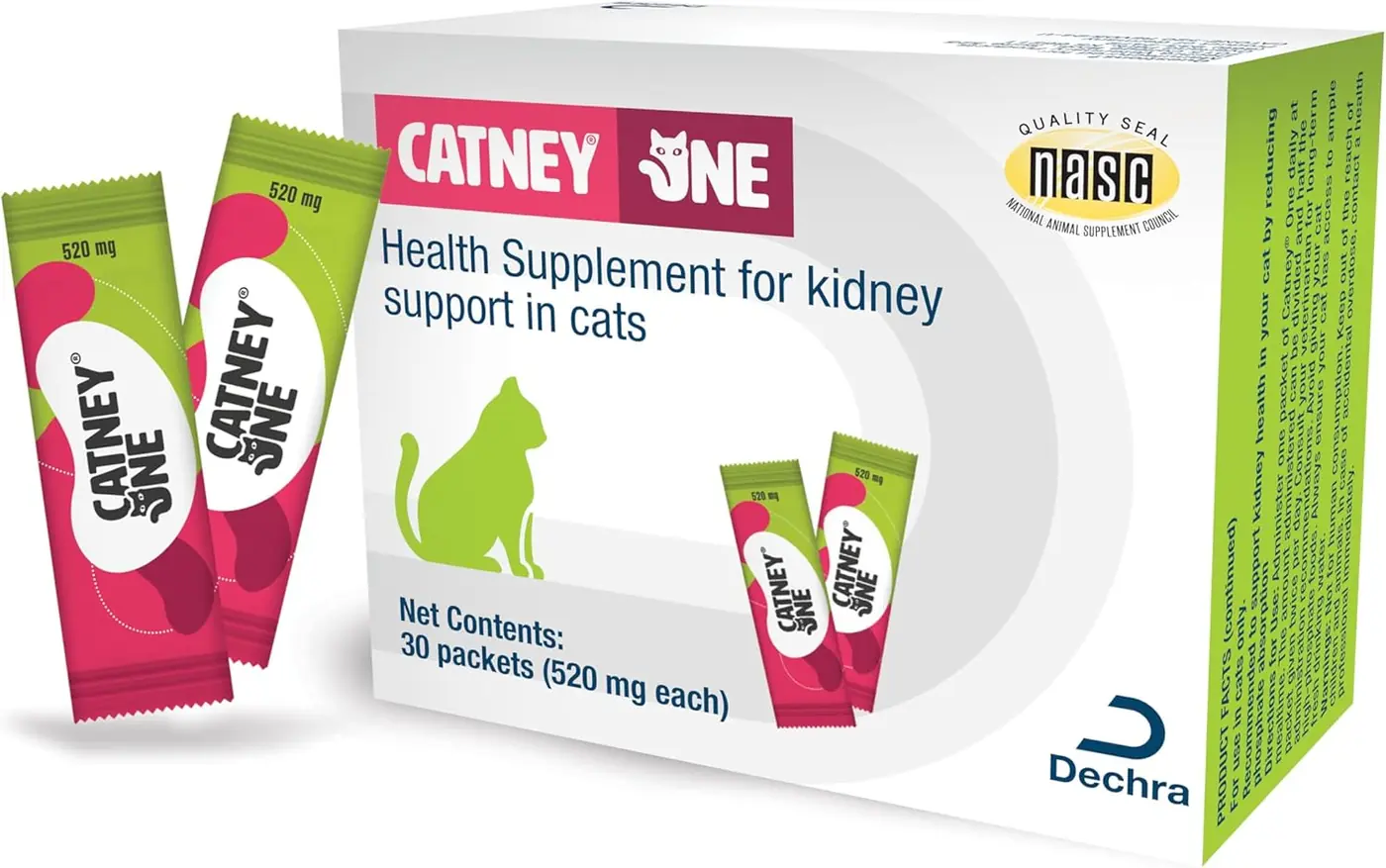
Catney One
Updated October 25, 2026 | 140 views
Product Overview and Mechanism
What it is Catney One is a relatively new, "next-generation" phosphate binder specifically designed for cats. Unlike older binders that rely on calcium (Epakitin) or aluminum (Phos-Bind), Catney One uses Lanthanum Carbonate.
How it works Lanthanum is a rare-earth element that acts as a powerful magnet for phosphorus. When sprinkled on food, it binds to dietary phosphorus in the gut, forming an insoluble complex that cannot be absorbed into the bloodstream. This complex is then safely excreted in the feces.
Key Distinction: The "Goldilocks" Binder It solves the two biggest problems of older binders:
-
No Calcium: Safe for cats with high blood calcium (Hypercalcemia), unlike Epakitin.
-
No Aluminum: Eliminates concerns about long-term aluminum accumulation or toxicity (though rare in cats), unlike Phos-Bind.
-
It is often marketed as a companion product to Porus One (a charcoal-based toxin absorber), as they are made by the same parent company (Dechra/Porus GmbH) and address different aspects of CKD.
Formula and Label Transparency
Active Ingredient
-
Lanthanum Carbonate Octahydrate (457 mg per packet): A potent binding agent originally developed for human dialysis patients (under the drug name Fosrenol).
Inactive Ingredients
-
Maltodextrin: A starch filler derived from potatoes/corn.
-
Hydroxypropyl Methylcellulose: A plant-based fiber used to form the granules.
Format It comes in pre-measured stick packs (granules), not a loose powder tub. This ensures exact daily dosing but makes it harder to micro-adjust the dose for tiny kittens.
Dosing Directions
Standard Protocol
-
Dose: 1 packet per day for a standard-sized cat.
-
Administration: It consists of tasteless granules designed to be sprinkled on wet food.
-
Flexibility: You can (and should) split the packet across meals. For example, sprinkle half a packet on breakfast and half on dinner.
-
The "With Food" Rule: Like all binders, it must be mixed with food to work. Giving it on an empty stomach is useless because there is no phosphorus there to bind.
Safety Cautions & Drug Interactions
Gastrointestinal Tolerance Lanthanum is generally well-tolerated, but like any granular supplement, it can cause mild vomiting or soft stools in sensitive cats during the first week.
The "2-Hour Rule" Lanthanum binds more than just phosphorus; it can bind other medications, rendering them ineffective.
-
Separate: Do not give antibiotics (especially quinolones like Zeniquin or tetracyclines like Doxycycline) or thyroid meds within 2 hours of eating food treated with Catney One.
Contraindications
-
Safe for: Diabetic cats (minimal carb impact from maltodextrin).
-
Avoid: There are no specific major contraindications, making it one of the safest binder options available.
Real-World User Feedback
The Good: "The Stealth Binder"
-
Palatability: This is its biggest selling point. Unlike gritty powders, the granules are exceptionally small, odorless, and tasteless. Most users report that even "super-taster" cats do not detect it when mixed into gravy or pâté.
-
Convenience: Owners love the stick packs—no measuring spoons, no white dust clouds, and easy to hand off to pet sitters.
The Bad: The Price Tag
-
Cost: It is significantly more expensive per day than buying a bulk tub of Aluminum Hydroxide (Phos-Bind). You are paying for the "new technology" and the convenience of stick packs.
-
Availability: As a newer product, it is sometimes harder to find in local pet stores compared to established brands, often requiring online ordering or vet prescription.
Expert Verdict
Bottom Line Catney One is arguably the best-in-class phosphate binder for the modern cat owner who can afford it. It offers the potency needed for Stage 3–4 CKD without the risks of calcium or aluminum.
Who is this best for?
-
The "Refuser" Cat: Cats who hate the taste of other binders.
-
The Complex Case: Cats who have both high phosphorus AND high calcium.
-
Convenience Seekers: Owners who want a simple "tear and pour" solution.
Who should avoid this?
-
Budget-Conscious Owners: Generic Aluminum Hydroxide is much cheaper and nearly as effective for most cats.
How to trial safely
-
Check Labs: Confirm your cat actually has high phosphorus (> 4.5–5.0 mg/dL) before starting. Binders are not preventative; they treat an active problem.
-
Split the Stick: Start with just 1/4 packet per meal to ensure no vomiting occurs.
-
Recheck: Blood work is needed 4 weeks after starting to see if the phosphorus level has dropped into the target range.
References
-
Dechra Veterinary Products. (n.d.). Catney One Product Information and Technical Sheet. Retrieved January 5, 2026.
-
Kidder, A. C., & Chew, D. (2009). Treatment options for hyperphosphatemia in feline CKD: what's out there? Journal of Feline Medicine and Surgery, 11(11), 913–924. (Discusses Lanthanum as an emerging therapy).
-
Schmidt, B., et al. (2006). Lanthanum carbonate for the treatment of hyperphosphatemia in chronic renal failure. Clinical Nephrology, 65(3).
-
Veterinary Medical Center. (n.d.). Lanthanum (Catney One) as a Phosphate Binder for Cats with CKD: Clinical Trial Overview. Ohio State University College of Veterinary Medicine.
Disclaimer: This content is for educational purposes only and does not constitute veterinary medical advice. Supplements are not regulated by the FDA to the same standards as pharmaceuticals; "natural" does not mean "safe," and ingredients or potency can vary between batches. Always consult with your primary care veterinarian or a veterinary internal medicine specialist regarding your cat’s specific condition and potential interactions with prescribed medications.