ProductsWeruva Wx Chicken Hydrating Puree
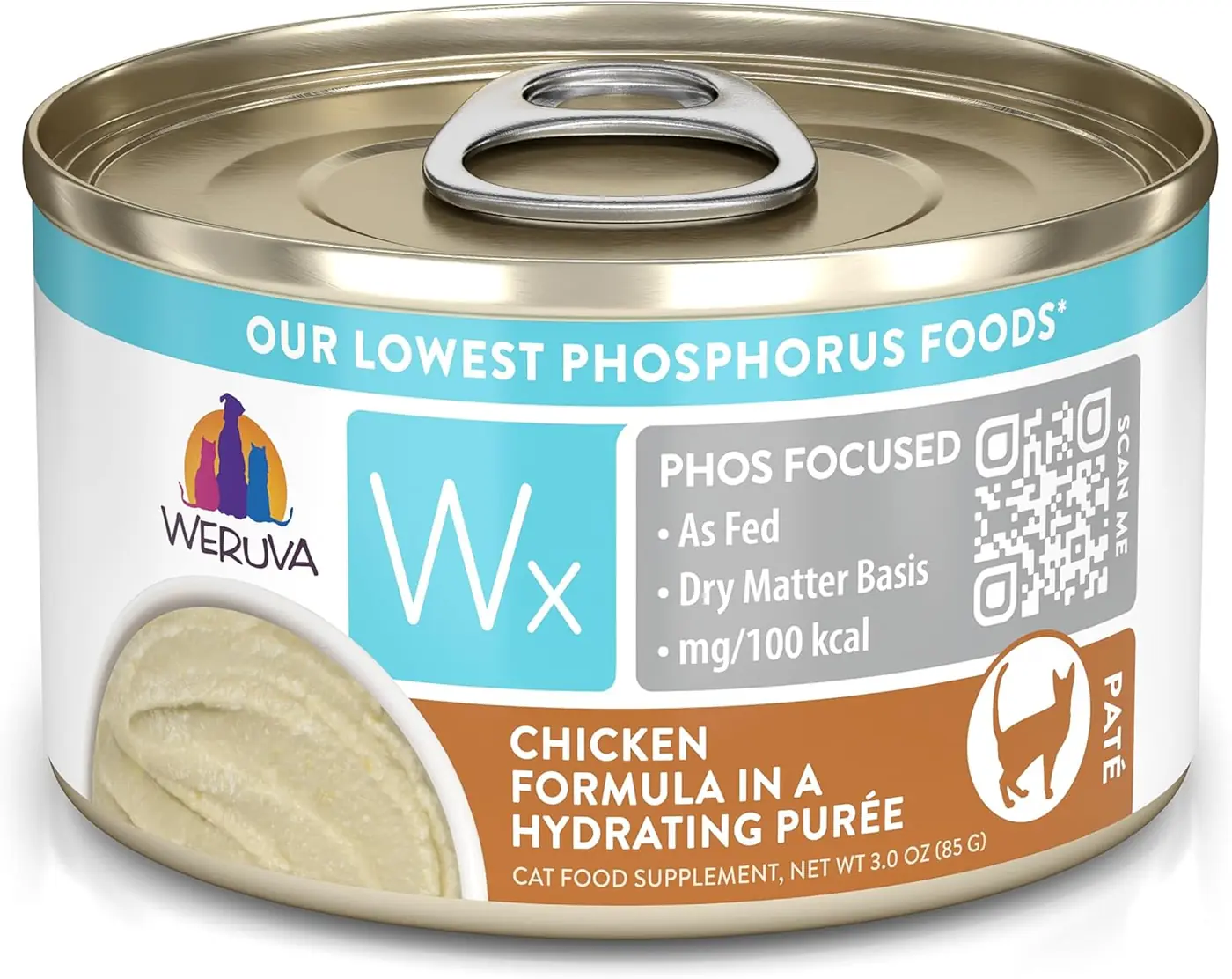
Weruva Wx Chicken Hydrating Puree
Updated October 25, 2026 | 106 views
Product Overview and Mechanism
What it is This is a specialized wet food from the Weruva Wx line, featuring a smooth, soup-like puree texture made primarily from chicken. The "Hydrating Puree" format is designed to tackle two major CKD problems at once: high phosphorus (which damages kidneys) and dehydration (which makes cats feel terrible).
How it works
-
The "Boneless" Secret: Phosphorus in cat food mainly comes from bone. By using mechanically de-boned chicken meat and egg whites, this formula achieves prescription-level low phosphorus naturally, without using heavy chemical binders.
-
The Hydration Focus: Kidney cats are prone to chronic dehydration. This formula is processed into a very wet, lappable puree (over 80% moisture), acting almost like "edible subcutaneous fluids" to flush the kidneys.
Key Distinction: High Protein, Low Phosphorus
-
The Philosophy: Unlike traditional renal diets (which restrict protein to reduce waste), Wx restricts ONLY phosphorus while keeping protein levels high.
-
Why this matters: This aligns with modern research suggesting that starving early-stage CKD cats of protein causes muscle wasting (cachexia). This puree aims to keep the muscle on the cat's spine while protecting the kidneys from phosphorus.
Formula and Label Transparency
Active Ingredients
-
Chicken & Chicken Broth: The primary ingredients.
-
Egg Whites: A "gold standard" kidney protein because it is highly digestible and naturally almost zero-phosphorus.
-
Texture: It is completely smooth - no chunks, no shreds. It is designed for cats who prefer to lick their food rather than chew.
Nutritional Profile (Chicken Puree)
-
Phosphorus: Extremely low (approx. 0.39% on a Dry Matter Basis). This is significantly lower than most commercial foods and competitive with prescription renal diets.
-
Carbohydrates: Very low (grain-free, starch-free).
All five formulas share the same base: chicken or tilapia, egg white, chicken fat, sunflower oil, fish oil, and eggshell calcium - no gums, no fillers, no grain. That combination gives cats highly bioavailable protein with minimal phosphorus load.
Moisture & Protein
They’re 83% water with ~60% protein and ~30% fat (dry matter). That’s as close to a cat’s natural prey ratio as it gets - and perfect for hydration support in CKD.
Phosphorus
This is where Weruva shines.
• Tilapia & Chicken Puree: 0.28% P (53 mg/100 kcal)
• Tilapia & Tuna Puree: 0.32% (63)
• Chicken & Tilapia Gravy: 0.35% (64)
• Chicken Puree: 0.39% (78)
• Chicken in Gravy: 0.42% (77)
All within kidney-safe targets (<0.55% or <100 mg/100 kcal).
Sodium
Ranges from 79 - 130 mg/100 kcal.
Best for hypertensive cats: Chicken in Gravy and Chicken Puree.
Calcium-to-Phosphorus Ratio
Ca:P runs 1.4 - 2.5 - slightly higher by design to buffer phosphorus and protect against secondary hyperparathyroidism.
Other Notes
• All include fish oil (EPA/DHA) for anti-inflammatory kidney support.
• The Tilapia & Tuna version includes a synthetic vitamin K source (menadione).
Dosing and Transitioning
Feeding Strategy
-
Caloric Density: Because it is so watery (for hydration), it is less calorically dense than a dense pate. You may need to feed a higher volume to maintain your cat's weight.
-
The "Topper" Hack: If you cannot afford to feed this exclusively, many owners use it as a "hydrating topper" on standard food to increase water intake and lower the overall phosphorus of the meal.
Safety Cautions & Clinical Nuance
The "Protein" Debate (Who should avoid this) While high protein preserves muscle, it creates nitrogen waste.
-
Avoid in Late-Stage CKD: If your cat is in Stage 3 or 4 with very high BUN numbers or acts "drunk" from uremic toxins, the high protein in this chicken puree might be too much work for their kidneys. These specific cats often do need the protein restriction of a prescription diet like Hill's k/d.
Kitten Warning Do not feed this to kittens. Growing bones need phosphorus. Feeding this ultra-low phosphorus diet to a healthy kitten can cause severe skeletal deformities (rickets). This is strictly a senior/medical support diet.
Real-World User Feedback
The Good: "The Toothless Wonder"
-
Dental Friendly: Because it requires zero chewing, this is the top choice for senior cats with stomatitis, missing teeth (resorptive lesions), or sore mouths who cannot handle chunks.
-
"Lickable" Appeal: Many CKD cats become lazy eaters who only want to lick gravy. This entire can is essentially "thick gravy," so they finish the whole meal without leaving dried-out meat bits behind.
The Bad: "Too Soupy?"
-
The Splatter: It is very liquid. Messy eaters can fling it out of the bowl.
-
Satiety: Because it flows through the stomach quickly, some owners report their cats asking for food again sooner compared to eating a solid pâté.
Expert Verdict
Bottom Line The Weruva Wx Chicken Hydrating Puree is a standout product for CKD Cats who have stopped eating chunks or need maximum hydration. It is effectively a "meat smoothie" that delivers high-quality protein with incredibly low phosphorus.
Who is this best for?
-
The "Lapper": Cats who lick the gravy and leave the meat.
-
Dental Cases: Seniors with bad teeth.
-
The Dehydrated Cat: Cats with dry gums or constipation who refuse water fountains.
How to trial safely
-
Check BUN: Confirm your cat's BUN isn't sky-high (indicating they can handle the protein).
-
Texture Test: Buy one can first. Some cats love soup; others are confused by the lack of "chew."
-
Monitor Weight: Weigh your cat weekly to ensure the high moisture content isn't causing them to undereat on calories.
References
-
Hall, J. A., et al. (2019). Effects of dietary protein concentration on renal function and survival in cats with chronic kidney disease. Journal of Veterinary Internal Medicine.
-
Laflamme, D. P. (2008). Pet food safety: dietary protein. Topics in Companion Animal Medicine, 23(3), 154–157.
-
Weruva. (n.d.). Wx Phos Focused Nutritional Analysis and Technical Data (Chicken Puree). Weruva International.
-
Zoran, D. L. (2002). The carnivore connection to nutrition in cats. Journal of the American Veterinary Medical Association, 221(11), 1559–1567.
Disclaimer: This content is for educational purposes only and does not constitute veterinary medical advice. Supplements are not regulated by the FDA to the same standards as pharmaceuticals; "natural" does not mean "safe," and ingredients or potency can vary between batches. Always consult with your primary care veterinarian or a veterinary internal medicine specialist regarding your cat’s specific condition and potential interactions with prescribed medications.