ProductsRx Vitamins Amino B+K
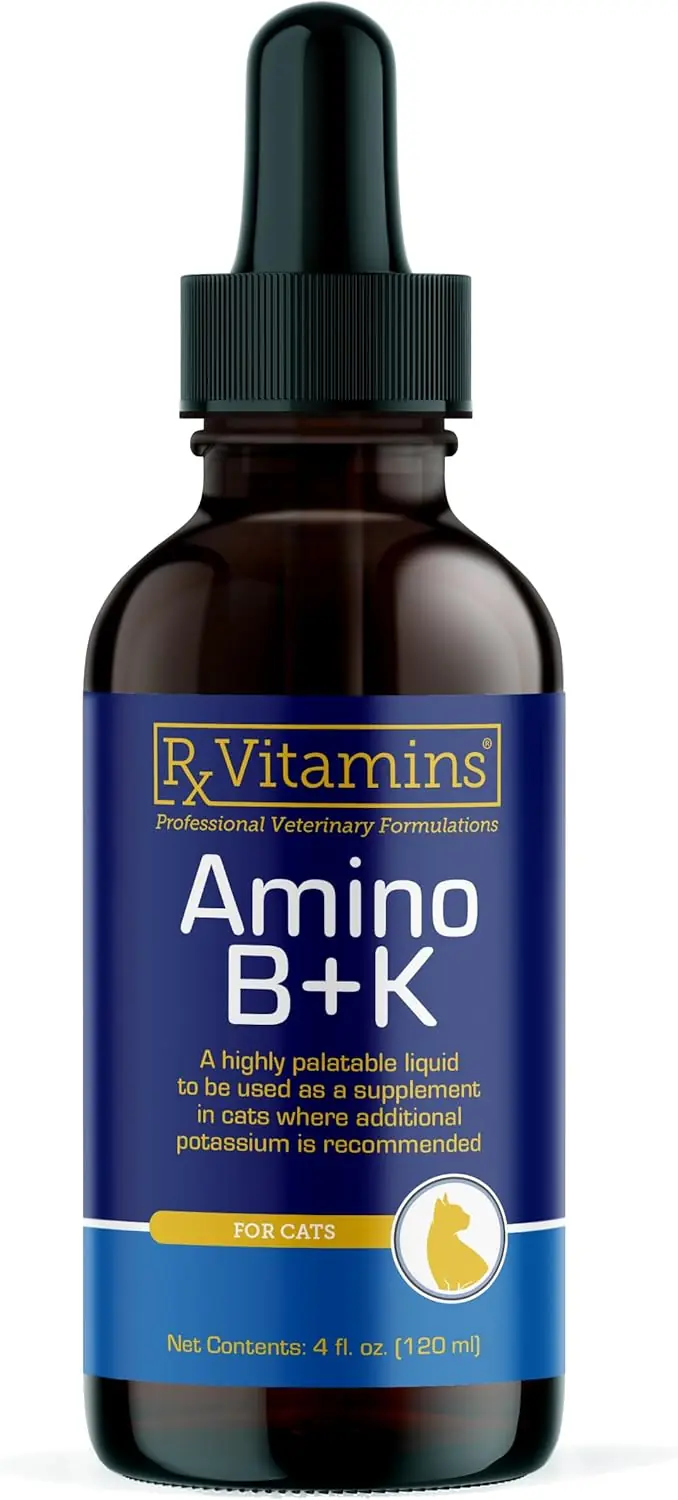
Rx Vitamins Amino B+K
Updated October 25, 2026 | 82 views
Product Overview and Mechanism
What it is Amino B+K is a dual-action liquid supplement designed specifically for cats with Chronic Kidney Disease (CKD). It combines a therapeutic dose of Potassium (K) with a full B-Vitamin Complex and amino acids.
Why the "+K" Matters The "K" stands for Potassium. In Stages 2 and 3 of CKD, cats urinate excessively (polyuria), which flushes vital potassium out of their body.
-
Hypokalemia (Low Potassium): This causes severe muscle weakness (often seen as a "drooping neck" or wobbly legs), constipation, and poor coat.
-
The Solution: This product replaces that lost potassium while simultaneously replenishing the B-vitamins that are also lost in the urine. It effectively combines two common treatments (Renal K gel + Vitamin B liquids) into one syringe.
Formula and Label Transparency
Active Ingredients (per 2 ml dose)
-
Potassium Gluconate (2 mEq): This is the standard veterinary form of potassium supplement. "2 mEq" is a significant therapeutic dose, much higher than what is found in general multivitamins.
-
B-Complex: Includes B1, B2, B3, B5, B6, and B12 (Cyanocobalamin) to support appetite and energy.
-
Amino Acids & Iron: Includes Taurine (liver/heart health) and Spirulina (source of iron), though the iron level is low (micro-dose).
Transparency Score Excellent. Rx Vitamins is a professional veterinary brand. The label clearly states the exact milliequivalents (mEq) of potassium, which allows your veterinarian to calculate the precise dosage needed to correct your cat's blood levels.
Dosing Directions & Math
The "2 ml" Standard The standard serving size is 2 ml, which delivers 2 mEq of potassium.
-
Why volume matters: 2 ml is a somewhat large amount of liquid to syringe into a cat (almost half a teaspoon).
-
Adjustment: Your vet will tell you how much to give based on your cat's blood work (e.g., "Give 2 mEq twice daily"). Do not guess.
The "With Food" Rule Potassium is extremely irritating to the stomach lining. Never give this on an empty stomach. It can cause immediate vomiting or pain. Always mix it into food or give it immediately after a meal.
Safety Cautions & Clinical Nuance
The Hyperkalemia Risk (Vital Warning) You must not use this product unless your cat has a documented potassium deficiency (Hypokalemia) confirmed by blood work.
-
The Danger: If your cat's potassium is already normal or high (Hyperkalemia), which can happen in late-stage kidney failure or urinary blockages, adding more potassium can stop their heart (cardiac arrest).
-
Monitoring: Frequent blood checks are required to ensure you aren't pushing the potassium levels too high.
The "Cyanocobalamin" Note Unlike the "Methyl B12" products, this formula uses Cyanocobalamin. While safe, it is the synthetic form of B12 and is slightly less bioavailable. However, for most cats, the sheer convenience of getting potassium and B-vitamins in one dose outweighs this minor downside.
Real-World User Feedback
The Good: "The All-in-One Solution"
-
Simplicity: Owners love replacing two separate products (a potassium gel or powder + a vitamin liquid) with one bottle. It reduces the "caregiver burden" of managing a complex medication schedule.
-
Effectiveness: Users frequently report that the "wobbly legs" associated with low potassium resolve within a week of starting this supplement.
The Bad: The Volume and Taste
-
Palatability: Potassium salts are naturally bitter/salty. While flavored with liver/bacon, many cats dislike the taste.
-
Syringe Struggle: Because you have to give 2 ml (a large volume), it can be a wrestling match if the cat refuses to eat it mixed in food.
-
Sticky Mess: The liquid is thick and brown; it acts like syrup and creates a sticky mess if the cat spits it out.
Expert Verdict
Bottom Line Rx Vitamins Amino B+K is the gold standard liquid for the specific "polyuric" CKD cat who is peeing out all their nutrients. It addresses the two most common deficiencies (Potassium and B-Vitamins) in a single step.
Who is this best for?
-
The "Wobbly" Cat: Cats with confirmed low potassium and rear leg weakness.
-
Stage 2-3 CKD: The "polyuric phase" where nutrient loss is highest.
Who should avoid this?
-
Cats with Normal Potassium: Do not use this as a "preventative." Potassium is a drug, not a casual treat.
-
The Nauseous Cat: If your cat is already vomiting, the potassium may aggravate their stomach. Treat the nausea first.
How to trial safely
-
Lab Work First: Do not buy this until you see "Low Potassium" on your vet report.
-
Mix, Don't Syringe: Try mixing it into a strong-smelling food (like Fancy Feast or sardines) first. The large liquid volume is easier to hide in food than to force down a throat.
-
Watch for Nausea: If your cat vomits 15 minutes after dosing, they likely need it with a larger meal or cannot tolerate the potassium format.
References
-
Dowling, S. (n.d.). Potassium homeostasis in chronic kidney disease.
-
International Renal Interest Society (IRIS). (2023). Treatment Recommendations for CKD in Cats. (Guidelines on managing Hypokalemia).
-
Rx Vitamins for Pets. (n.d.). Amino B+K Technical Data Sheet. Rx Vitamins.
-
Sparkes, A. H., et al. (2016). ISFM Consensus Guidelines on the Diagnosis and Management of Feline Chronic Kidney Disease. Journal of Feline Medicine and Surgery, 18(3), 219–239.
Disclaimer: This content is for educational purposes only and does not constitute veterinary medical advice. Supplements are not regulated by the FDA to the same standards as pharmaceuticals; "natural" does not mean "safe," and ingredients or potency can vary between batches. Always consult with your primary care veterinarian or a veterinary internal medicine specialist regarding your cat’s specific condition and potential interactions with prescribed medications.