ProductsGrizzly Pet Products Omega -3 Supplement
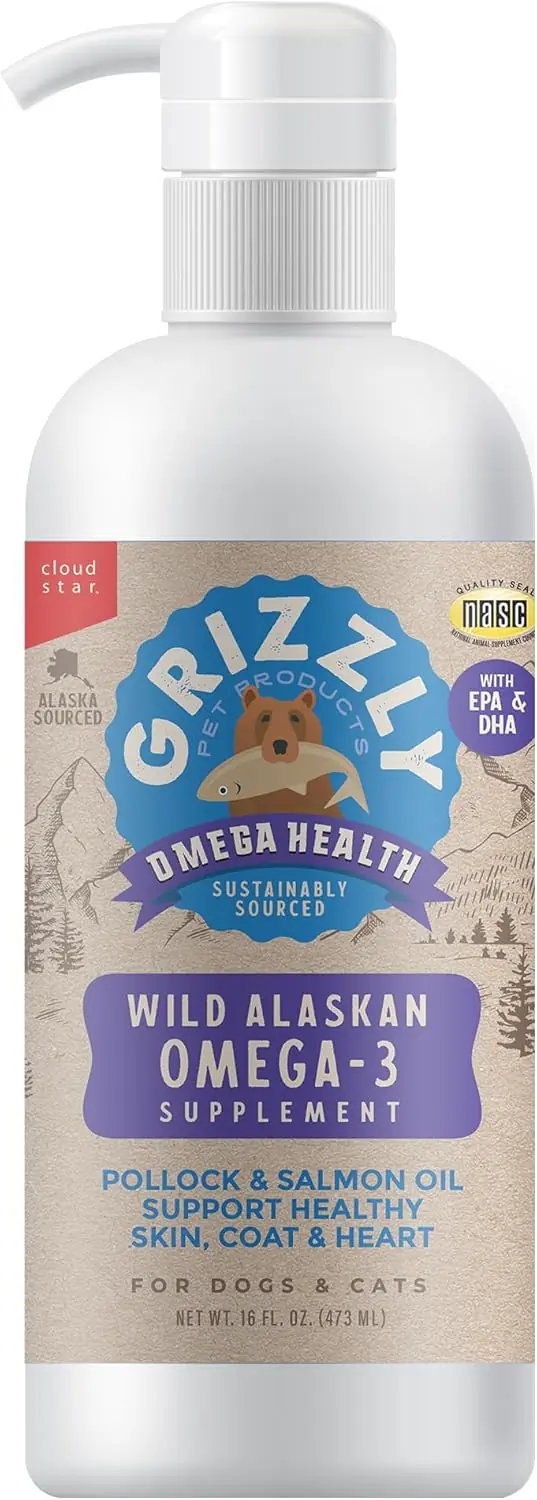
Grizzly Pet Products Omega -3 Supplement
Updated October 25, 2026 | 62 views
Product Overview and Mechanism
What it is This is a "wild-caught" fish oil blend. While many owners still call it "Grizzly Salmon Oil," the formula was updated a few years ago to become "Salmon Plus." It is no longer 100% salmon oil. It is now a blend of Wild Salmon Oil, Wild Pollock Oil, and Whitefish Oil.
-
Why the change? Sustainability. Wild salmon stocks are dwindling, so Grizzly blended in Pollock and Whitefish (which are abundant) to keep the price stable while maintaining high Omega-3 levels.
The CKD Angle: The "Potency" King Despite the blend, this is one of the most potent oils on the market.
-
The Numbers: A single teaspoon (5 ml) delivers roughly 600 mg of EPA and 460 mg of DHA.
-
Why this matters: This is significantly higher than many standard "pet" fish oils. For a CKD cat, where the goal is to lower kidney inflammation (glomerulonephritis), you need a high dose of EPA. This bottle delivers that medicinal punch in a smaller volume of oil, meaning you don't have to drown their food in liquid to get the therapeutic effect.
Formula and Label Transparency
Active Ingredients
-
Salmon Oil, Pollock Oil, Whitefish Oil: All sourced from wild Alaskan waters.
-
Tocopherols (Vitamin E): Added as a natural preservative to stop the oil from turning rancid.
The "Blend" Risk (Diarrhea) While the blend is sustainable, some "old school" users report that sensitive cats who tolerated pure salmon oil developed loose stools when switched to this new blend. Pollock and Whitefish are slightly different fats, and CKD cats often have finicky digestion.
Dosing Directions & The "Pump" Math
The 16oz Bottle Warning You linked the 16oz bottle. This size is designed for big dogs, and the pump is calibrated accordingly.
-
The Pump Volume: One full pump from the 16oz bottle dispenses approx. 3.5 ml.
-
The Cat Dose: A standard 10 lb CKD cat typically needs roughly 0.5 ml to 1.0 ml per day.
-
The Danger: If you give your cat one full pump from this big bottle, you are giving them 3x–4x the recommended dose. This will almost certainly cause severe diarrhea and potentially pancreatitis.
-
The Fix: You must buy a separate oral syringe to draw the oil out, or pump it into a spoon and only feed a fraction of it. Do not pump directly onto cat food.
Note: The smaller 4oz and 8oz bottles have smaller pumps (2 ml), which are safer for cats.
Safety Cautions & Clinical Nuance
Refrigeration is Mandatory (Despite the Label) Grizzly's label states you can store it at room temperature. Ignore this.
-
For CKD: You are giving this to a sick animal with compromised kidneys. Oxidized (rancid) oil creates free radicals that damage the kidneys further.
-
The Rule: Always refrigerate this bottle. If it smells "paint-like" or sour, throw it away.
The "Leaking" Pump Grizzly bottles are notorious for leaking oil from the neck of the pump.
-
Pro Tip: Keep the bottle inside a plastic ziplock bag or on a dedicated saucer in your fridge. If you don't, you will end up with a ring of fish oil on your refrigerator shelf that is very hard to clean.
Real-World User Feedback
The Good: "The Coat Transformation"
-
Efficiency: Because it is so concentrated, you use very little. A 16oz bottle will last a single cat almost a year (if it doesn't go bad first).
-
Palatability: Most cats enjoy the taste, as it has a robust, authentic fish scent. It can help mask the taste of potassium powders or other bitter kidney meds mixed into food.
The Bad: "Too Big for One Cat"
-
Waste: Because fish oil expires 3 months after opening, a single cat will never finish a 16oz bottle before it goes bad. You end up throwing away half the bottle.
-
Recommendation: It is actually cheaper in the long run to buy the 4oz or 8oz bottle, even if the price per ounce is higher, because you will actually finish it while it is fresh.
Expert Verdict
Bottom Line Grizzly Salmon Plus is a powerhouse supplement with some of the best EPA/DHA numbers in the industry. It is an excellent choice for reducing kidney inflammation in Stage 2–3 CKD cats.
Who is this best for?
-
Multi-Cat Homes: If you have 3+ cats, the 16oz bottle makes sense.
-
The "Pill Hider": The strong scent is great for masking medicines in wet food.
Who should avoid this?
-
Single-Cat Owners: Do not buy the 16oz bottle. It is too big and will spoil. Buy the small bottle.
-
Sensitive Stomachs: If your cat has a history of IBD or loose stools, the Pollock/Whitefish blend might be too rich compared to pure salmon oil.
References
-
Bauer, J. E. (2011). Therapeutic use of fish oils in companion animals. Journal of the American Veterinary Medical Association, 239(11), 1441-1451.
-
Grizzly Pet Products. (n.d.). Salmon Plus Technical Data Sheet and Guaranteed Analysis.
-
Lenox, C. E. (2016). Role of dietary fatty acids in dogs and cats. TVP Journal.
-
Plotnick, A. (2008). Feline Chronic Kidney Disease. Manhattan Cat Specialists.
Disclaimer: This content is for educational purposes only and does not constitute veterinary medical advice. Supplements are not regulated by the FDA to the same standards as pharmaceuticals; "natural" does not mean "safe," and ingredients or potency can vary between batches. Always consult with your primary care veterinarian or a veterinary internal medicine specialist regarding your cat’s specific condition and potential interactions with prescribed medications.