ProductsNecoichi Cat Scratcher Bowl for Indoor Cats
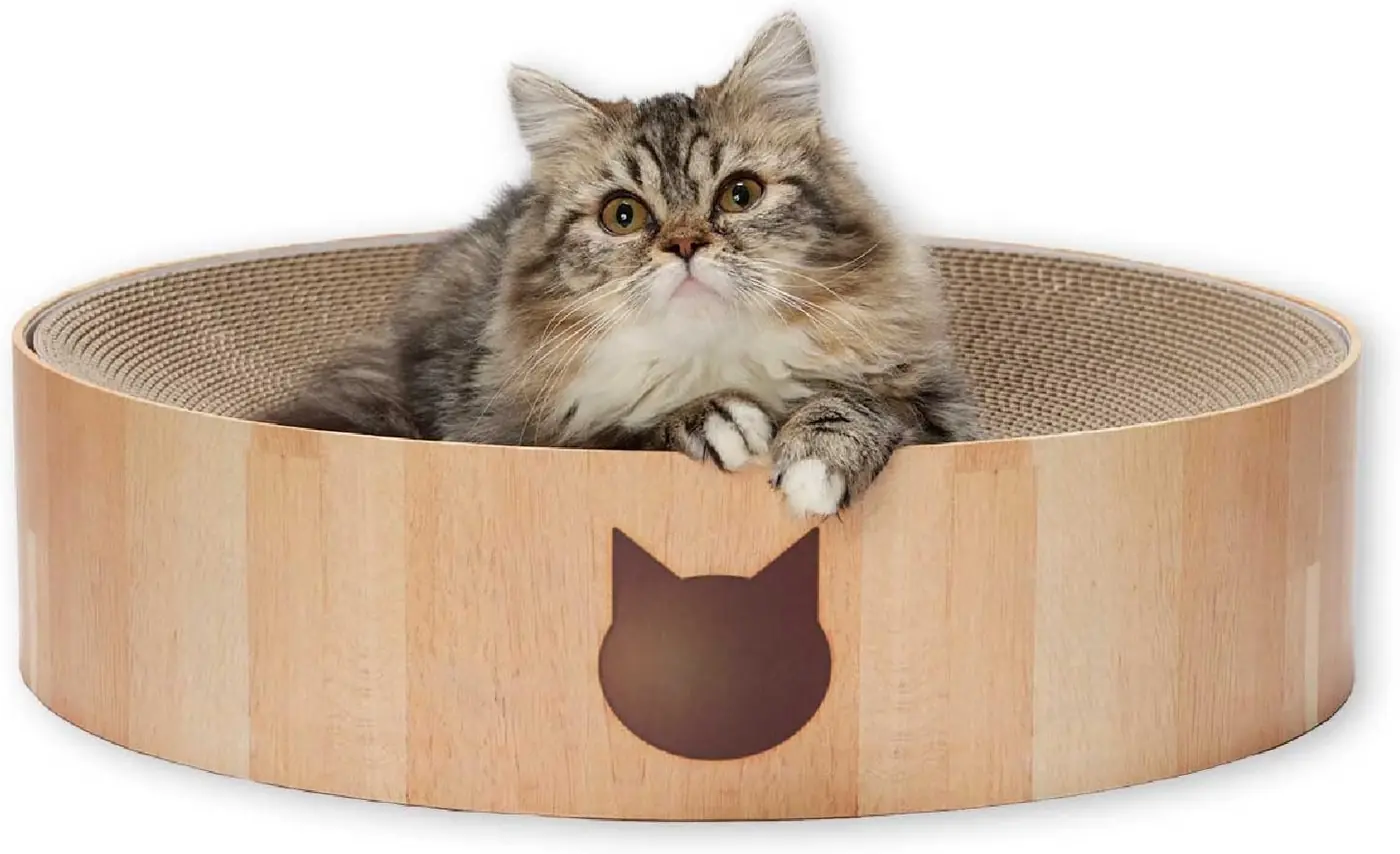
Necoichi Cat Scratcher Bowl for Indoor Cats
Updated October 25, 2026 | 67 views
Product Overview
What it is This is a Japanese-designed "2-in-1" furniture piece that serves as both a high-density cardboard scratcher and a concave lounge bed. Unlike flat scratching pads, the Necoichi is shaped like a deep soup bowl.
-
The Materials: It is made from 100% recycled paper and, critically, uses cornstarch glue rather than chemical adhesives.
-
The System: The scratching pad inside is reversible (you can flip it over when one side gets shredded) and eventually replaceable, so you don't have to throw away the outer shell.
The CKD Angle: Why the "Bowl" Shape Matters
For a healthy cat, this is just a scratcher. For a CKD cat, the ergonomics of this bowl serve a specific medical comfort function.
1. Thermoregulation (The "Anemia" Solution) As discussed previously, CKD cats are chronically cold due to anemia.
-
The Physics: A flat bed allows body heat to escape into the room. The Necoichi bowl is concave. When a cat curls up inside, the high cardboard walls reflect their own body heat back at them, creating a "thermal pocket."
-
The Result: You will often find CKD cats prefer this over a plush bed because the cardboard insulates surprisingly well without making them overheat.
2. Supporting the "Bony" Spine Weight loss and muscle wasting (cachexia) are hallmarks of Stage 3–4 CKD.
-
The Comfort: A cat with a bony spine finds it painful to sleep on flat, hard surfaces. The gentle curve of this bowl supports the spine in a natural "C" shape, relieving pressure points on their hips and shoulders. It is the perfect geometry for the "Meatloaf" position.
3. Chemical Safety (Pica Risk) CKD cats sometimes develop Pica (eating non-food items) due to anemia or mineral imbalances.
-
The Glue: Many cheap scratchers use formaldehyde-based glues. Necoichi uses cornstarch glue. If your sick cat accidentally ingests some of the cardboard while scratching (or chewing), it is non-toxic and plant-based, which is one less thing to worry about for their liver and kidneys.
Hygiene & Practicality
The "Vomit" Reality CKD cats vomit frequently (regurgitation).
-
The Fix: If a cat vomits on a $50 plush bed, you have to run it through the washing machine (and hope the foam doesn't warp). If they vomit on the Necoichi, you simply wipe the cardboard (it is dense enough to not soak through immediately) or, in a worst-case scenario, you flip the pad over or buy a replacement insert.
-
Longevity: The "Reversible" feature means you get double the life out of one pad.
Pros & Cons
The Good
-
High Walls: The raised rim provides a sense of security ("hiding in plain sight"), which lowers stress and blood pressure.
-
Replaceable Inserts: You can buy just the inner pads later, making it eco-friendly and cheaper in the long run.
-
Aesthetic: It looks like modern furniture, not a "cat toy," which keeps your home looking clean.
The Bad
-
Cardboard Shreds: While it is "low residue," it still produces cardboard flakes. You will need to vacuum around it occasionally.
-
Size Limits: If you have a massive cat (18+ lbs) or a Maine Coon, the standard size might be a tight squeeze. Look for the "Large" or "XL" diameter options.
Expert Verdict
Bottom Line The Necoichi Scratcher Bowl is a top-tier choice for the "Hospice" phase of CKD. It solves the issue of the cat sleeping on cold hard floors by giving them a warm, ergonomic "nest" that supports their frailty.
Recommendation Buy the Large (Regular) size for most cats (up to 12 lbs). If your cat is a larger breed or likes to stretch out fully, verify the diameter before ordering. Place it near a sunny window to maximize the thermal benefit.
References
-
Necoichi. (n.d.). Cozy Cat Scratcher Bowl Product Safety Specifications.
-
Sparkes, A. H., et al. (2016). ISFM Consensus Guidelines on the Diagnosis and Management of Feline Chronic Kidney Disease. (Discusses environmental enrichment and stress reduction).
-
Ellis, S. L. H., et al. (2013). AAFP and ISFM Feline Environmental Needs Guidelines. Journal of Feline Medicine and Surgery. (Highlights the importance of "hiding" resources for stress control).