ProductsPurina Pro Hydra Care Cat Supplements
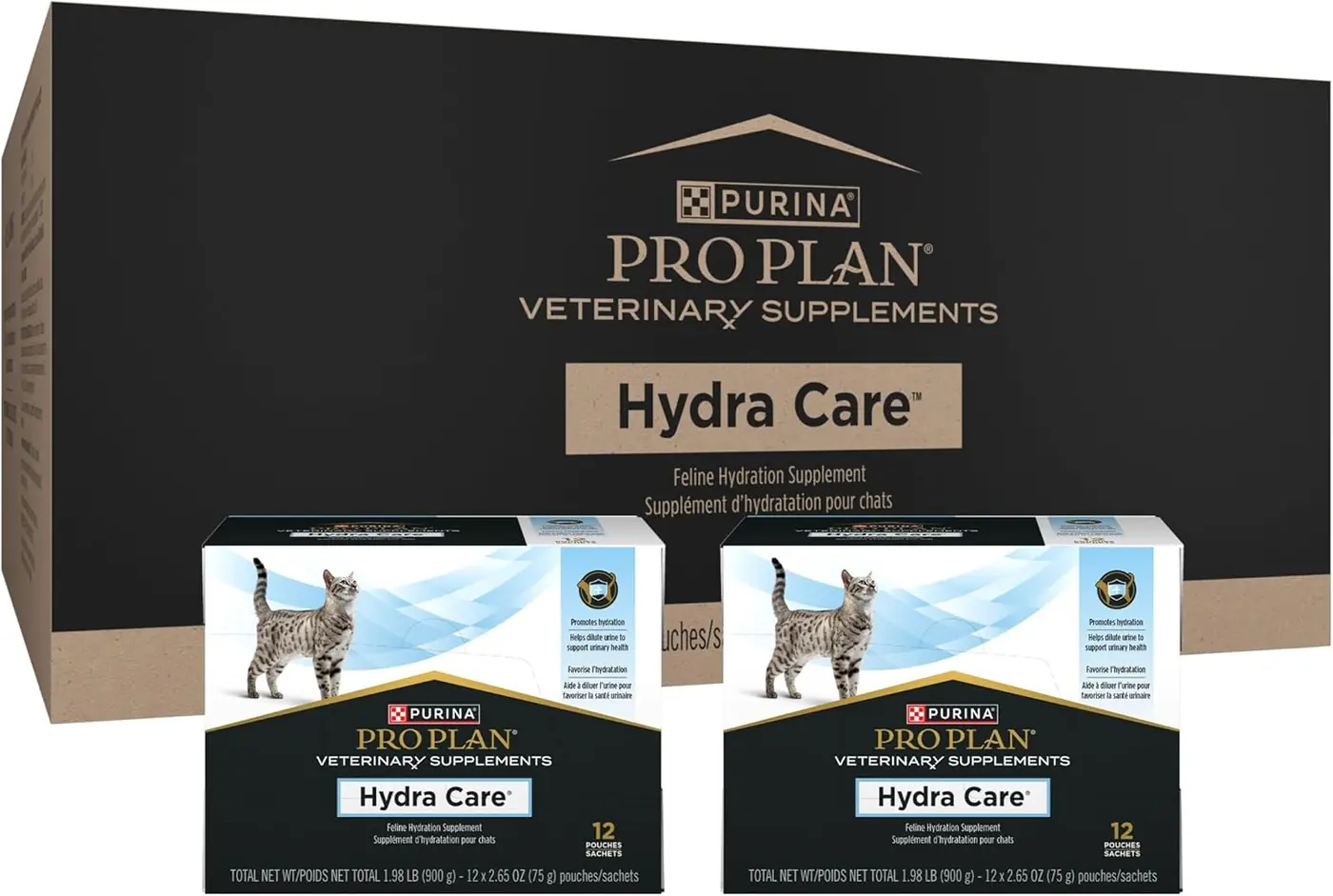
Purina Pro Hydra Care Cat Supplements
Updated October 25, 2026 | 98 views
Product Overview and Mechanism
What it is Hydra Care is not a "food" and it is not just "broth." It is a patent-pending "Nutrient-Enriched Water."
-
The Texture: It looks like a thin, brown liver-colored slurry (similar to chocolate milk consistency). It is 97% moisture.
-
The Goal: It is designed to lower urine specific gravity (make the urine more dilute).
The Science: "The Third Bowl" Most cats drink water to satisfy thirst. Hydra Care uses a different mechanism called osmolyte-assisted hydration.
-
The Active Agents: It contains Glycerin and Glycine. These are "osmolytes" (molecules that attract water).
-
How it works: When a cat drinks plain water, some is absorbed, and some passes through. When they drink Hydra Care, the osmolytes actively pull water across the cell membrane into the cells. Think of it as "sticky water" that stays in the body longer.
-
The Result: Studies show that cats consuming this consume 50% more liquid daily than cats offered plain water alone.
The CKD Angle: Is it Renal Safe?
1. Phosphorus & Sodium (The Safety Check)
-
Phosphorus: Extremely low. Because the protein source is Whey Protein Isolate (a pure protein with minerals removed) rather than meat meal, the phosphorus is negligible. It will not spike kidney values.
-
Sodium: It contains no added salt.
-
Calories: At only 16 kcal per pouch, it will not disrupt their main diet or cause weight gain.
2. The Potassium Variable (Critical Warning) The formula includes Potassium Chloride.
-
The Benefit: Many Stage 2–3 CKD cats lose potassium through excessive urination (Hypokalemia), leading to muscle weakness. For these cats, this supplement is a "two-for-one" benefit (hydration + potassium support).
-
The Risk: Some Stage 4 cats retain potassium (Hyperkalemia). If your cat already has high potassium on their bloodwork, feeding this might push them into a dangerous range. Check your cat's latest lab report before starting.
3. The "Dilution" Effect One of the main goals in CKD is to keep the kidneys flushed. Clinical trials showed that cats on Hydra Care produced significantly more urine volume with lower specific gravity. This reduces the concentration of toxins sitting in the bladder and kidneys.
Usage & Palatability
How to Serve
-
The "Third Bowl" Rule: Do not replace their water bowl. Offer this in a separate bowl. You want them to have the option of plain water or "special water."
-
Temperature: Most cats prefer it room temperature or slightly chilled.
-
Quantity: The recommended dose is one pouch per 5 lbs of body weight. For a standard 10 lb cat, that is 2 pouches a day. (This can get expensive).
The "Guar Gum" Effect The thickener used is Guar Gum.
-
The Downside: In sensitive cats, this soluble fiber can sometimes cause soft stools. If your CKD cat already has loose stool issues, introduce this slowly (half a pouch a day).
Expert Verdict
Bottom Line It is a scientifically validated tool for "sneaking" fluid into a cat. It is far more effective than broth because of the osmolyte technology. For a CKD cat struggling with dehydration (constipation, dry gums), this is often the step to try before committing to subcutaneous fluids (needles).
Who is this best for?
-
The "Dry" Cat: Cats who never visit the water bowl.
-
Hypokalemic Cats: Cats with low potassium who need a gentle boost.
Who should avoid this?
-
Hyperkalemic Cats: Cats with naturally high potassium levels (Stage 4).
-
The Sensitive Stomach: If the guar gum causes diarrhea, stop immediately, as diarrhea causes dehydration.
Recommendation: Start with one pouch daily to test for flavor acceptance and stool quality. If they like it and tolerate it, increase to the full dose (2 pouches for a 10lb cat) to see the full hydration benefit.