ProductsLitter-Robot 4 Supply Bundle - Automatic, Self-Cleaning Cat Litter Box, Includes Litter-Robot 4, 3 OdorTrap Refills, 10 Liners, 30 Cleaner Wipes, & 2 Carbon Filters
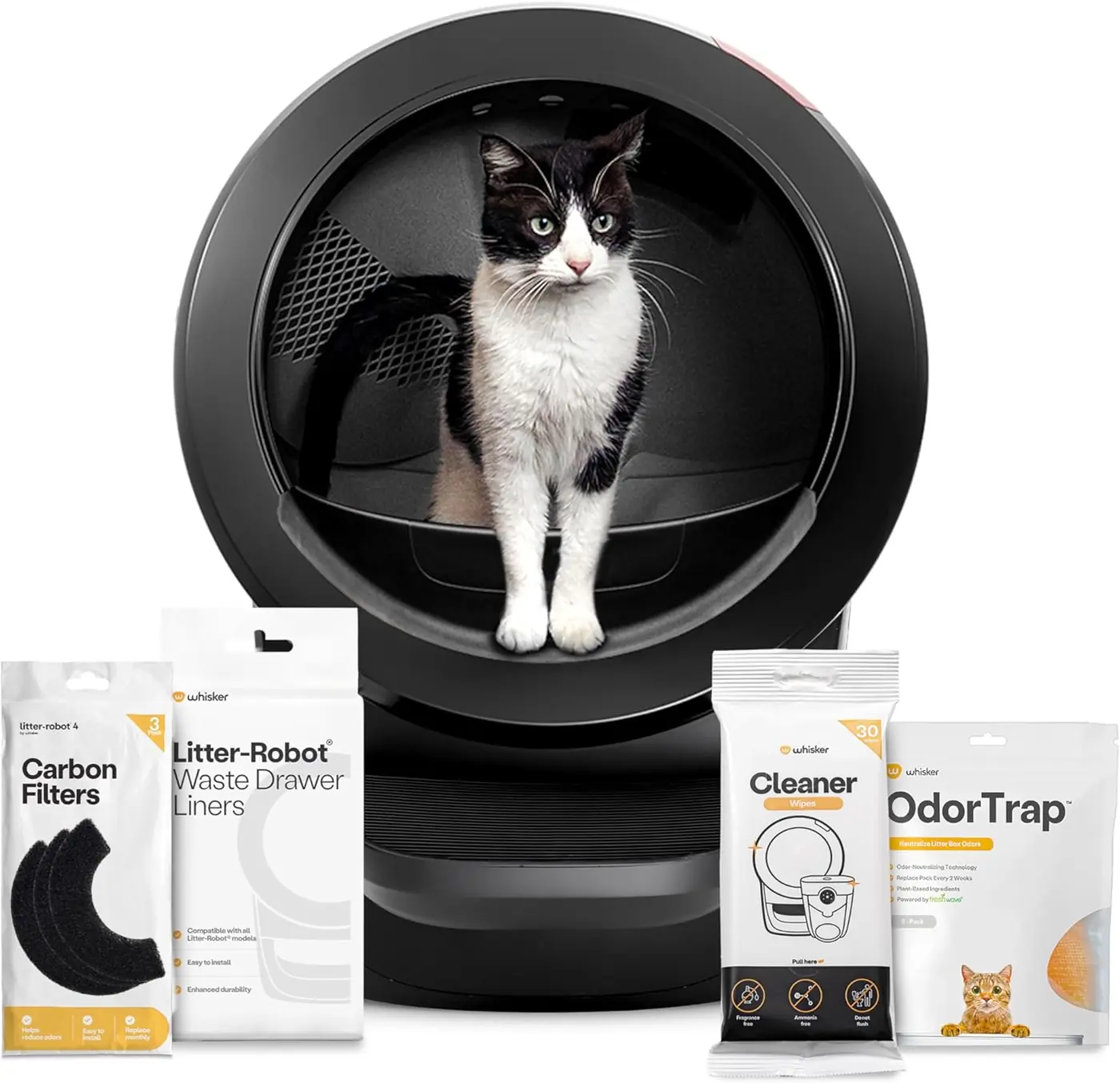
Litter-Robot 4 Supply Bundle - Automatic, Self-Cleaning Cat Litter Box, Includes Litter-Robot 4, 3 OdorTrap Refills, 10 Liners, 30 Cleaner Wipes, & 2 Carbon Filters
Updated October 25, 2026 | 56 views
Product Overview and Mechanism
What it is The Litter-Robot 4 is a self-cleaning litter box that uses a rotating "globe."
-
How it works: Minutes after your cat leaves, the globe rotates. The clean litter sifts through a screen, and the clumps slide into a sealed waste drawer at the bottom.
-
The Upgrade: Compared to the older Litter-Robot 3, the LR4 is significantly quieter ("whisper quiet"), has a wider opening, and features advanced laser sensors rather than just weight sensors.
The CKD Angle: It’s a "Medical Monitoring" Device
For a healthy cat, this machine is a luxury convenience. For a CKD cat, it is a diagnostic tool.
1. The "Polyuria" Alarm (Usage Tracking) CKD cats urinate frequently (polyuria). If a CKD cat suddenly stops peeing (blockage/crash) or starts peeing too much (diabetes complication), you need to know immediately.
-
The App: The Whisker app notifies you every time the cycle runs. It tracks "History" so you can see trends.
-
Scenario: You check the app and see your cat visited the box 12 times today instead of the usual 6. That is your early warning to book a vet appointment before they crash.
-
2. Weight Management (Cachexia Watch) Weight loss is the silent killer in CKD. The LR4 has a built-in scale in the base.
-
The Data: Every time your cat enters, it records their weight. While it may fluctuate by +/- 0.5 lbs depending on how they stand, the trend line is invaluable. You will notice a slow drop in weight weeks before you might notice it visually.
3. Ammonia Control (Respiratory Health) CKD cats are immunocompromised. Standing in a box with old urine (ammonia) is bad for their lungs and can trigger secondary infections. The LR4 removes the waste immediately, ensuring they always step onto clean, dry litter.
The "CKD Flaw": The Pee Pancake
There is one specific problem that CKD owners face with this machine: The clumps are too big.
-
The Issue: CKD cats produce massive, dilute urine clumps (the size of tennis balls or pancakes). Because the volume is so high, the litter often turns to "cement" before it can dry.
-
The Result: The clump sticks to the rubber liner. When the robot cycles, the clump doesn't fall off; it just smears across the ceiling of the globe.
-
The Fix: You cannot use the default settings.
-
Change the Timer: Go into the app and set the "Cycle Delay" to 15 or 25 minutes (default is 7). This gives the massive CKD clump time to harden before the robot tries to move it.
-
Use Premium Litter: You need a fast-clumping, hard-drying litter. (See recommendation below).
-
Accessibility: The "Arthritis" Barrier
Most CKD cats are seniors with stiff hips.
-
The Height: The entry to the LR4 is roughly 15 inches off the ground. This is too high for a weak CKD cat to jump comfortably.
-
The Solution: You must buy the official Ramp or a set of stairs. Do not expect an arthritic cat to jump into this; they will simply start peeing on the floor next to it.
Expert Verdict
Bottom Line The Litter-Robot 4 is a phenomenal tool for managing the "data" of kidney disease (weight and frequency). However, it requires "tweaking" to handle the high urine volume of a sick cat.
Who is this best for?
-
The "Data" Nerd: If you want to graph your cat's bathroom habits to show your vet.
-
The Busy Owner: If you work long hours and can't scoop 3x a day to keep the box sterile.
Who should avoid this?
-
The "Scaredy Cat": If your cat is terrified of motors or noises, the rotation might scare them into holding their urine (which is dangerous for kidneys).
-
The Budget Conscious: It is $700+. A standard box with high-quality litter works just fine if you scoop diligently.
Recommendation If you buy this, you must pair it with BoxiePro Deep Clean Litter. It is widely considered the only litter that dries fast enough to prevent the "CKD sticking" issue in the robot. Also, buy the ramp.
References
-
Litter-Robot Support. (n.d.). Cycle Timer Settings for High Volume Urination.
-
VCA Animal Hospitals. (n.d.). Monitoring Water Intake and Urine Output in CKD Cats.
-
Whisker App. (n.d.). SmartScale Technology and Weight Tracking Limitations.